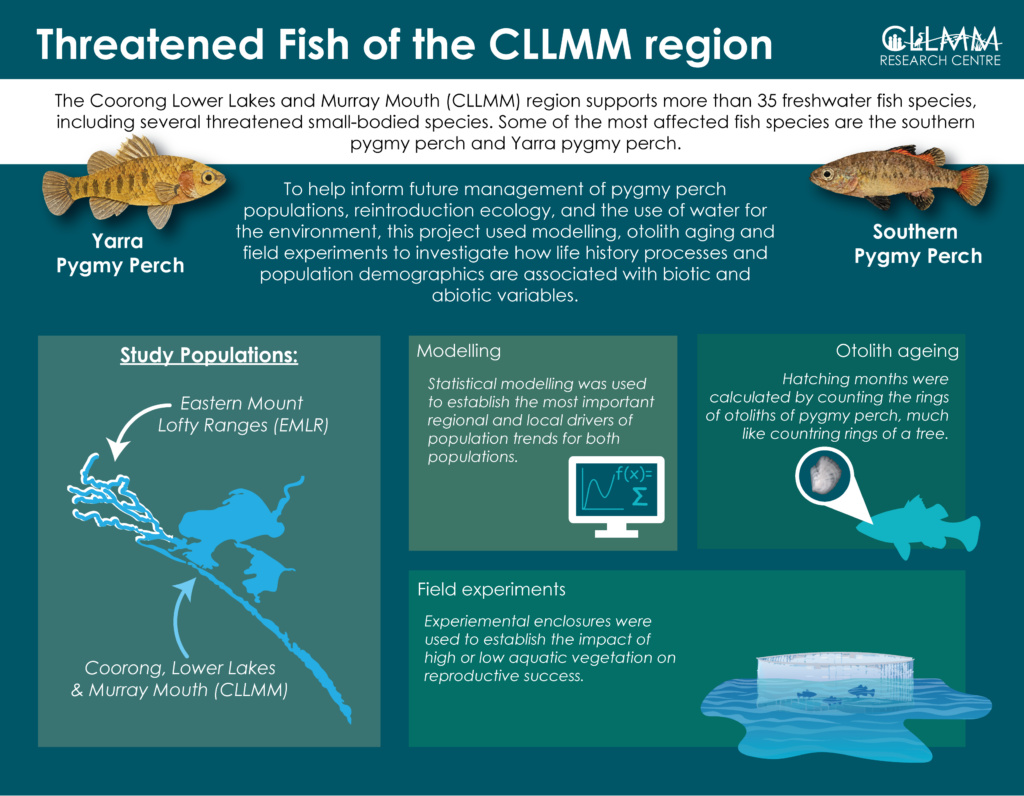
CLLMM Research Centre researchers have uncovered important new insights into the life of one of the region’s smallest threatened fish.
For the first time, researchers from the Centre’s threatened fish conservation project, led by Sylvia Zukowski (Nature Glenelg Trust), have produced credible age estimates for the nationally Vulnerable southern pygmy perch (Nannoperca australis) using tiny ear bones known as otoliths. The research reveals when the fish hatch, how quickly they grow and how this information can be used to shape future conservation efforts in the Coorong, Lower Lakes and Murray Mouth (CLLMM).
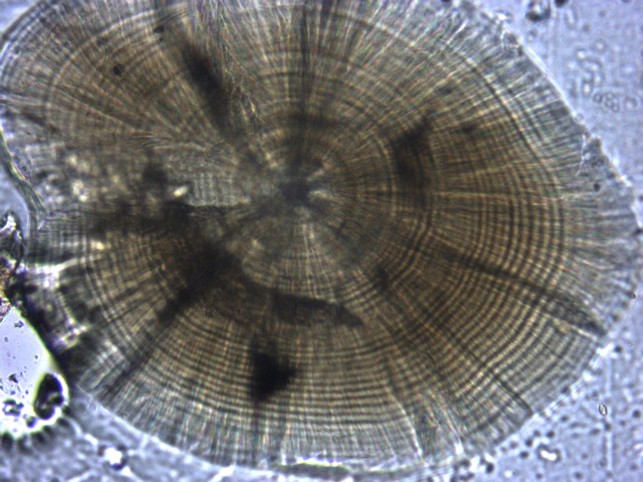
Much like the growth rings of a tree, otoliths contain microscopic daily growth increments that record a fish’s life history. The team examined 169 otolith samples collected from the Lower Lakes between 2014 and 2024, and were able to successfully estimate the age of individual fish. Working back, they were then able to estimate when hatching occurred.
Southern pygmy perch lifecycle
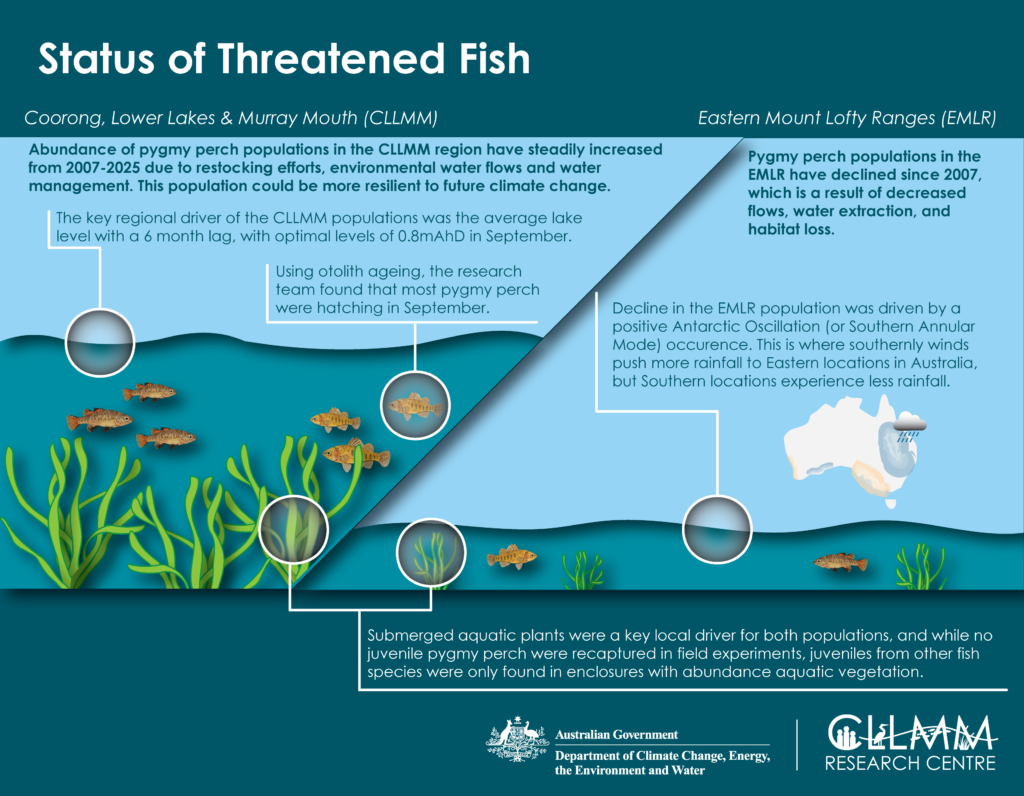
The team found that southern pygmy perch predominantly hatch during spring and early summer, with September and December the most common hatching months. Young fish grew rapidly during their first few months of life before their growth gradually slowed as they matured.
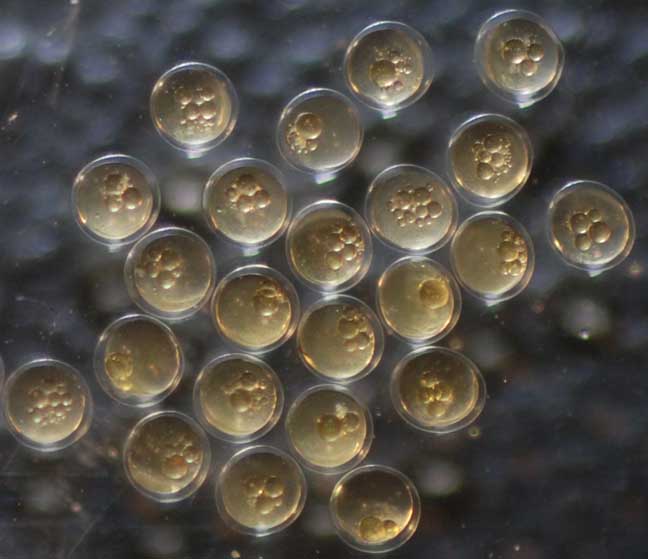
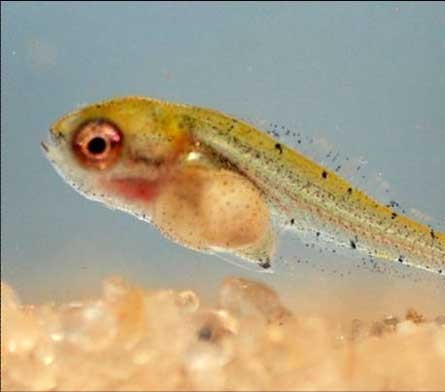
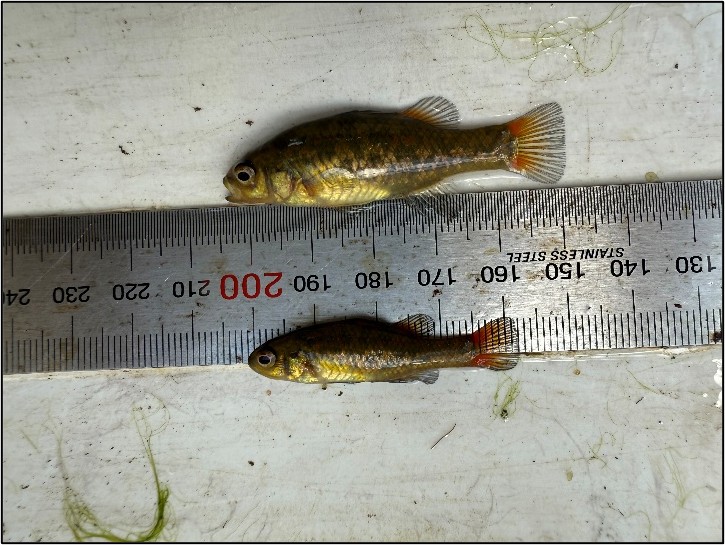
The research also confirmed that daily growth increments can be reliably interpreted in most young southern pygmy perch, providing scientists with an important new tool to better understand the species’ life history. Further work is needed to strengthen and validate the technique, but their work is already providing valuable information for conservation planning.
One of the most significant discoveries is that the timing of hatching closely aligns with water management conditions previously identified as being beneficial for the species. Population modelling undertaken as part of the same project found that maintaining Lake Alexandrina water levels of around 0.8 metres AHD during September creates optimal conditions for southern pygmy perch populations in the Lower Lakes. The otolith study found that September is also one of the peak hatching periods, suggesting these water levels are closely linked to successful spawning and recruitment.
Understanding exactly when fish breed gives environmental water managers greater precision in planning watering events, allowing limited water resources to be delivered when they can provide the greatest benefit.
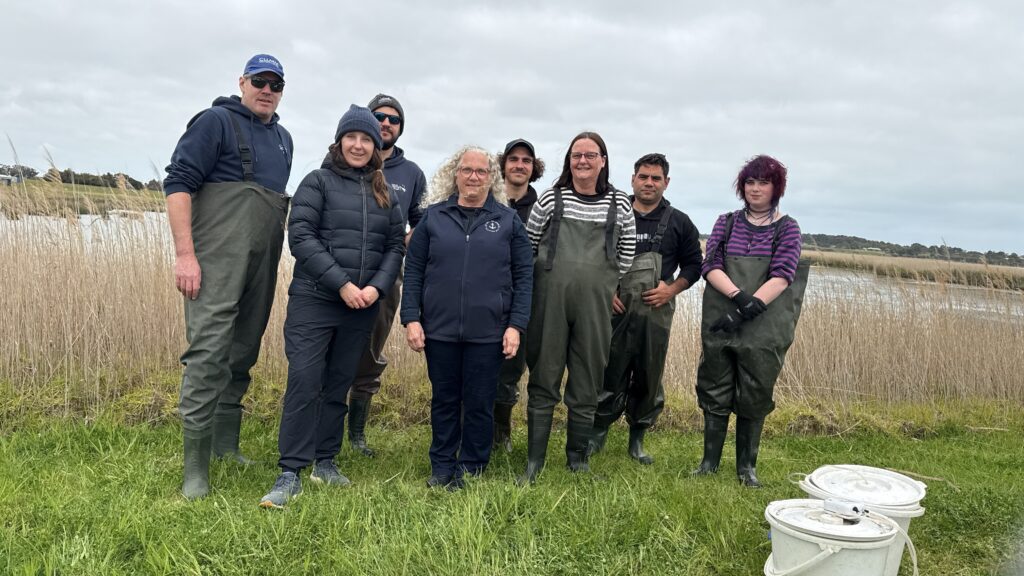
What factors influence fish abundance?
The research team analysed more than 15 years of monitoring data to understand how southern pygmy perch populations respond to environmental change across the CLLMM and the tributary streams of the Eastern Mount Lofty Ranges regions.
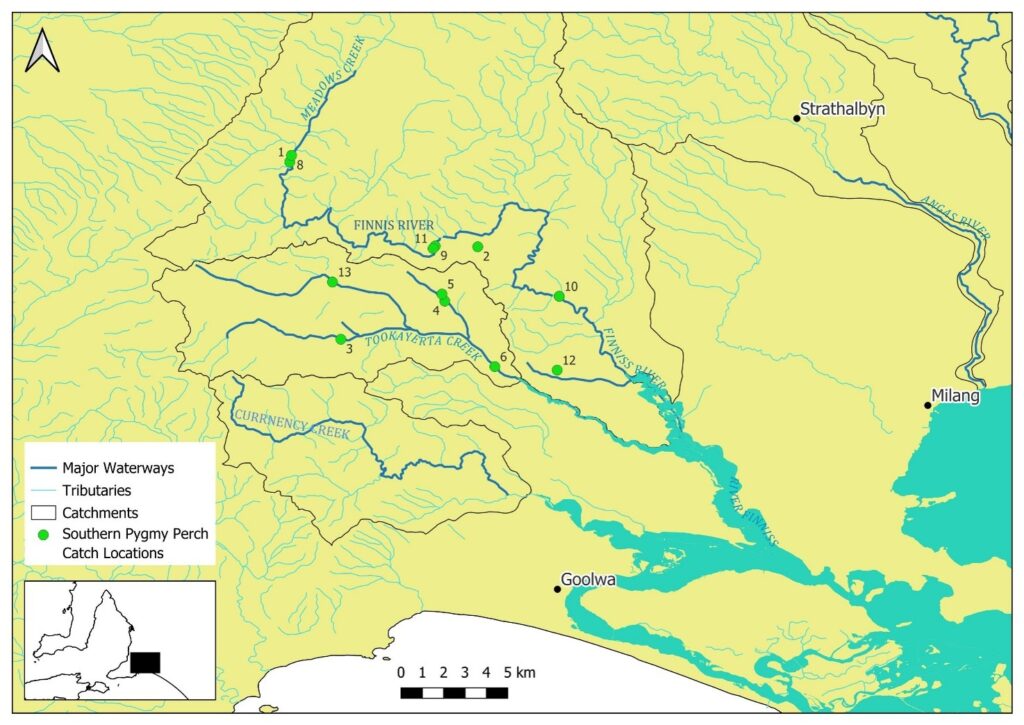
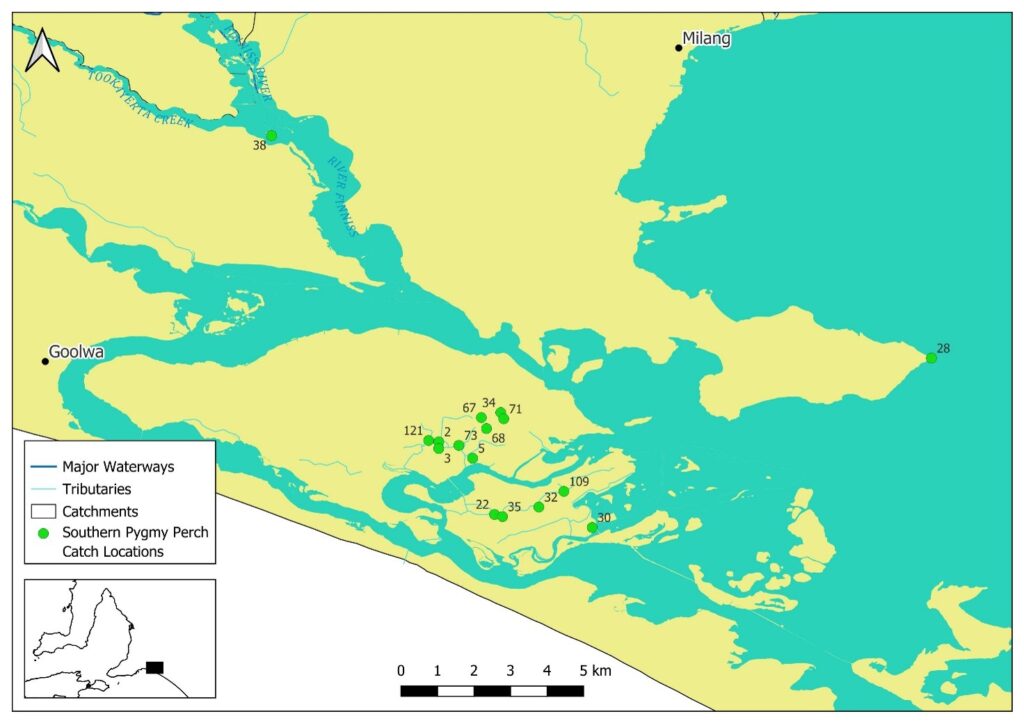
In the Eastern Mount Lofty Ranges, southern pygmy perch populations have continued to decline over the study period (2007–2025), with researchers finding evidence that a drying climate and limited water availability are contributing to ongoing losses.
The strongest regional driver of population decline was broader climate conditions linked to a positive Antarctic Oscillation. This is where southerly winds push more rainfall to eastern Australia, while southern Australia experiences less rainfall. Positive Antarctic Oscillation conditions are expected to become more common under climate change, and the team’s research suggests that perch populations in the Eastern Mount Lofty Ranges will require urgent intervention to remain viable.
In the Lower Lakes, southern pygmy perch populations have made an encouraging recovery since the Millennium Drought. While the species experienced a dramatic collapse during the drought years, conservation actions including reintroductions, habitat management and water level management have helped support population recovery. The team’s modelling found that lake water levels were the single most important regional driver of population abundance, reinforcing the importance of managing environmental water to support fish breeding and recruitment.
Across both regions, one site factor consistently stood out – submerged aquatic vegetation. Sites with greater densities of aquatic macrophytes supported more southern pygmy perch. These underwater plants provide food, shelter and breeding habitat, highlighting the critical importance of protecting and restoring aquatic vegetation.
The CLLMM region supports more than 35 freshwater fish species – over half of the Murray-Darling Basin’s native fish – including several other threatened small-bodied species. The team’s findings are expected to benefit more than just southern pygmy perch, as many of these species share similar habitat and life history characteristics and face similar pressures from habitat loss, altered water regimes, invasive species and climate change.
The team’s work provides practical guidance for future conservation and will help to make sure that intervention decisions are based on a stronger scientific understanding of how best to protect some of Australia’s most threatened freshwater fish.