New research from the CLLMM Research Centre challenges the idea that environmental water and economic outcomes are competing objectives.
The research project, Community adaptation to worsening droughts and floods in the CLLMM, was a collaboration between Flinders University, Adelaide University, CSIRO, AU2100 and local community members. The project brought together economists, scientists, artists and community members to investigate how droughts and floods could change the value of the region and identify actions that could support economic and social resilience.
What is a healthy Coorong worth?
The Coorong, Lower Lakes, and Murray Mouth (CLLMM) region is a nationally and internationally significant wetland system that faces an unprecedented climate challenge that threatens billions of dollars in ecosystem services and regional prosperity.
The Millennium Drought highlighted just how vulnerable the region is, with previous research estimating $810 million in emergency spending, including $163.1 million for habitat restoration, $208.6 million for water infrastructure and $174.8 million in tourism losses.
Commercial fisheries contribute $31.5 million annually into the local economy, while nature-based tourism faces potential revenue losses reaching $200 million per year during severe droughts.
It was also estimated that the community is willing to pay $13 billion for environmental improvements in the Basin, with $5.8 billion specifically attributed to restoring the Coorong and Lower Lakes.
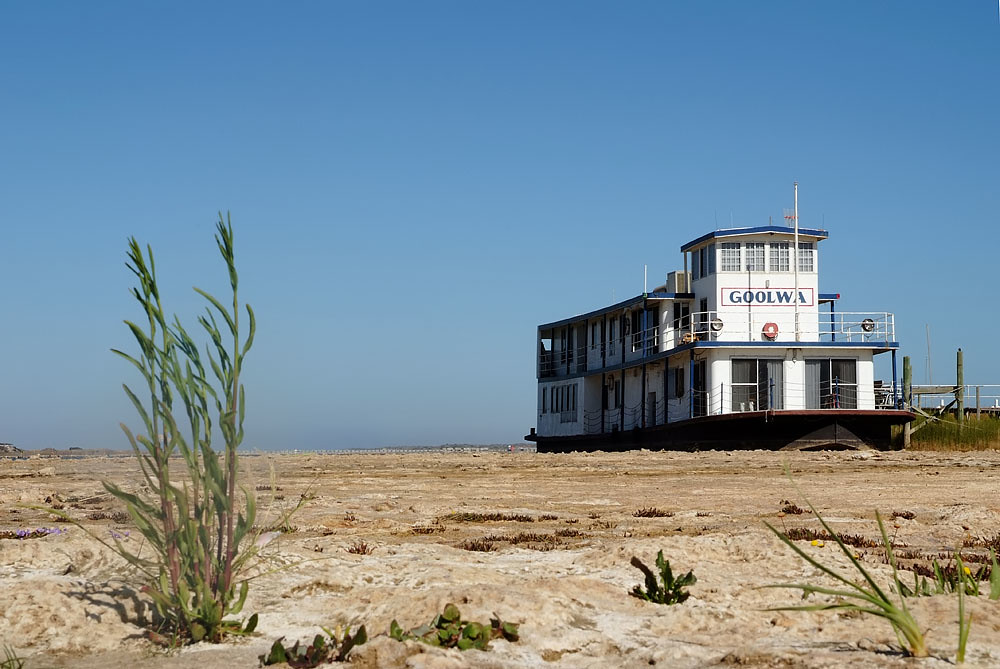
When water is scarce, difficult decisions follow
How much water should support agriculture? How much should remain in the environment?
The project team linked economic information to different water scenarios to assess the economic trade-offs of future water management decisions. This included examining the costs of reallocating water to the environment using water market data, farm budget analysis and economic modelling.
They found that while water is increasingly valuable for irrigation, the broader social benefits generated by healthy ecosystems can substantially exceed the agricultural opportunity costs of providing environmental flows.
For example, if 2,000 to 6,000 GL more environmental water was added to the system, their modelling showed that:
- $16-$48 billion could be lost from irrigation activities (at current water prices with limited climate adaptation)
- $120-$360 billion could be gained in non-market environmental values.
Climate adaptation is already happening across the region
The project team surveyed water-dependent businesses to find out how they were adapting to climate change and what they saw as the biggest obstacles to adaptation.
They talked to people from nature-based tourism, like caravan parks, eco-tours and Indigenous tourism as well as commercial and recreational fisheries, premium wine producers, irrigated agriculture like dairy farming, and people from critical marine services like jetty construction, and regional ferry operators. Most survey participants had been operating within the region for more than a decade.
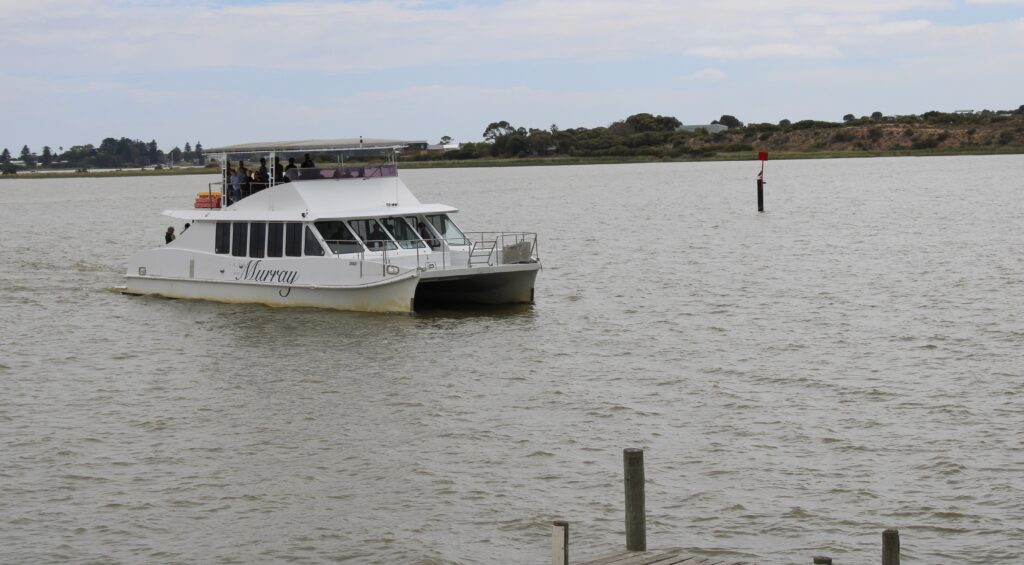
Tourism operators, fishers, irrigators and other businesses reported adapting by:
- investing in water-efficient technologies (e.g. soil moisture probes to reduce per hectare water use while maintain milk yield)
- adjusting irrigation practices (e.g. centre pivot)
- changing operational models
- diversifying products and services (e.g. moving from lake-level dependent boating to bird watching and cultural tours)
- improving flexibility in response to changing conditions.
Rising capital costs, insurance pressures, information complexity, workforce shortages and regulatory challenges were all factors that made long-term adaptation difficult for water-dependent businesses.
Many participants felt that their on-ground knowledge is not recognised in high-level decision-making, eroding trust in Basin institutions. These barriers contribute to a pattern where businesses often resort to reactive crisis management rather than proactive resilience investments, even when the long-run economics favour adaptation.
Creative arts approach explores how people experience environmental change and imagine future adaptation
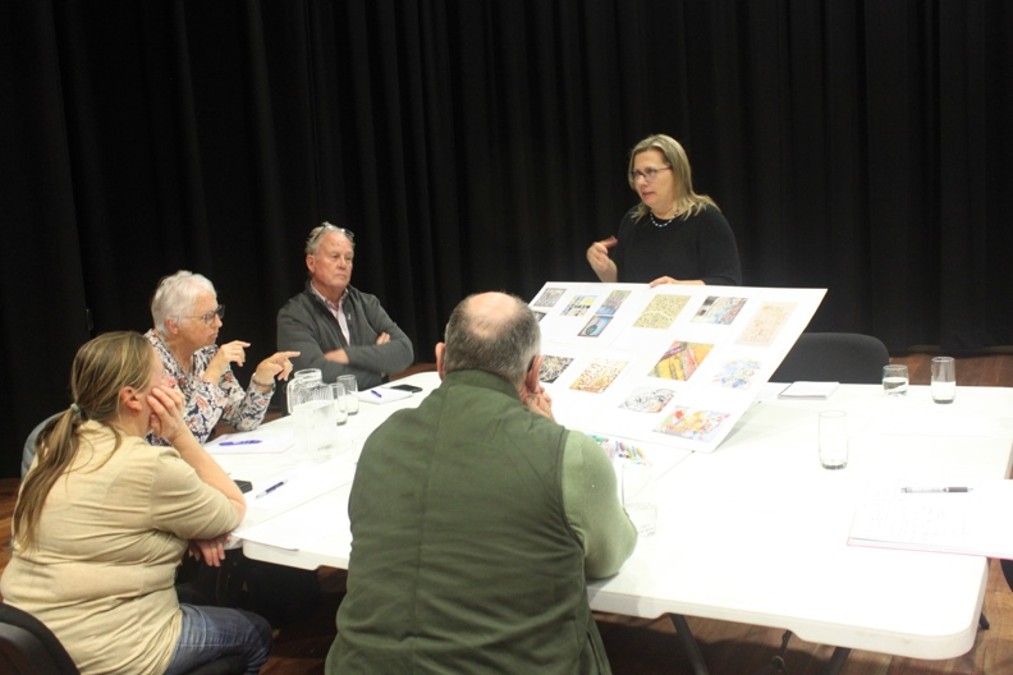
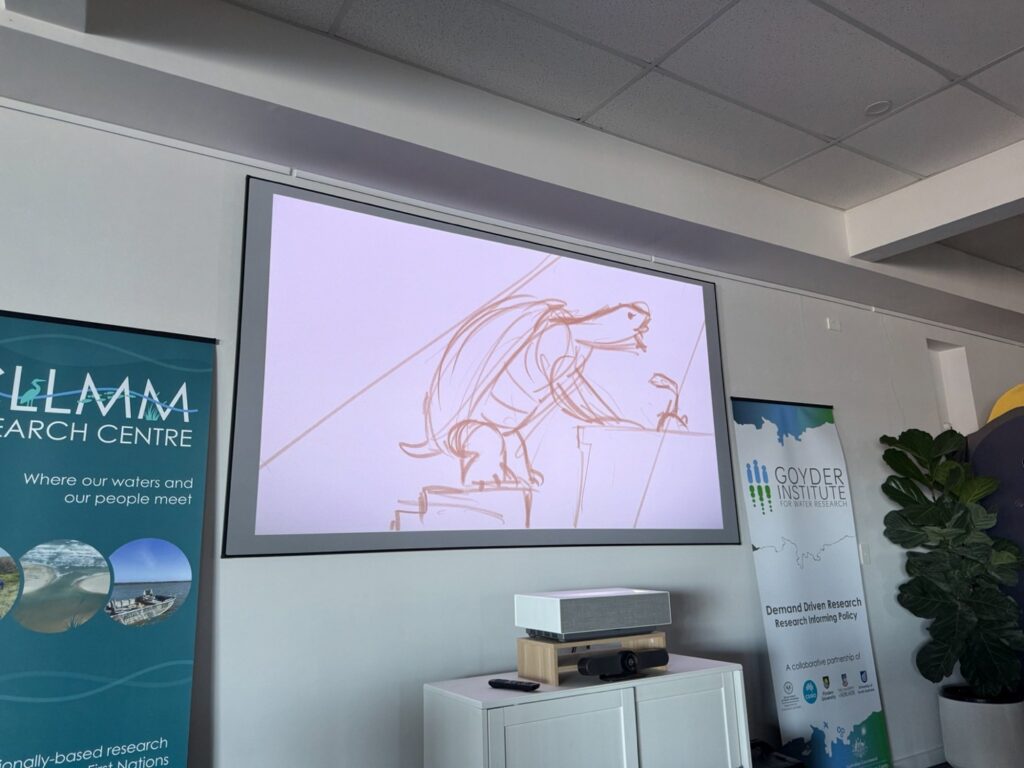
Alongside economic modelling and community surveys, the project team worked with community members through a series of co-design workshops. Participants shared knowledge, values, concerns and ideas for the future to help identify practical responses that support both community wellbeing and environmental resilience.
As a result of this process, the community members developed an animation so that they could translate complex climate adaptation concepts into a format that is accessible, engaging and grounded in local perspectives.
Securing the region’s ecological and economic future
One of the project’s clearest conclusions is that environmental health and economic prosperity are deeply connected — securing environmental flows delivers benefits that extend beyond ecology.
Healthy ecosystems support fisheries, tourism, recreation, water quality, biodiversity and regional wellbeing. At the same time, businesses and industries need support to navigate the transition and build resilience to future climate extremes.
The team made several recommendations to help secure the region’s ecological and economic future:
- secure strategic environmental water to secure baseline ecological flows and reduce future reliance on emergency flow responses
- improve access to clear and practical climate information to empower localised, climate-smart decision-making
- support businesses through targeted adaptation financial assistance like small grants and low interest loans
- take a coordinated approach to planning for climate change adaptation that prioritises collective action
- move from reactive crisis response to proactive adaptation planning.
Visit the Community adaptation project for more information or subscribe to our YouTube channel to access the community adaptation animation on its release.