
Researchers for the CLLMM Research Centre are heading back to the beaches this week to monitor local pipi (Goolwa cockles or kuti in Ngarrindjeri) populations. Their targeted surveys (before, during and after the recreational harvest season) are providing insight into how pipi populations have changed along Goolwa Beach.
The Goolwa and Younghusband Peninsula beaches support some of the largest populations of pipi in Australia. These populations are known to be highly dynamic, varying between sites and over time due to a range of environmental factors and impacts.
Large die-offs of pipi were observed when the South Australian harmful algal bloom impacted the region. Pipis experienced high concentrations of brevetoxin during this time (2025-26), which have forced changes to their recreational harvest along Goolwa Beach. The population was also influenced by the 2022-23 Murray River flooding that, anecdotally, led to pipi deaths.
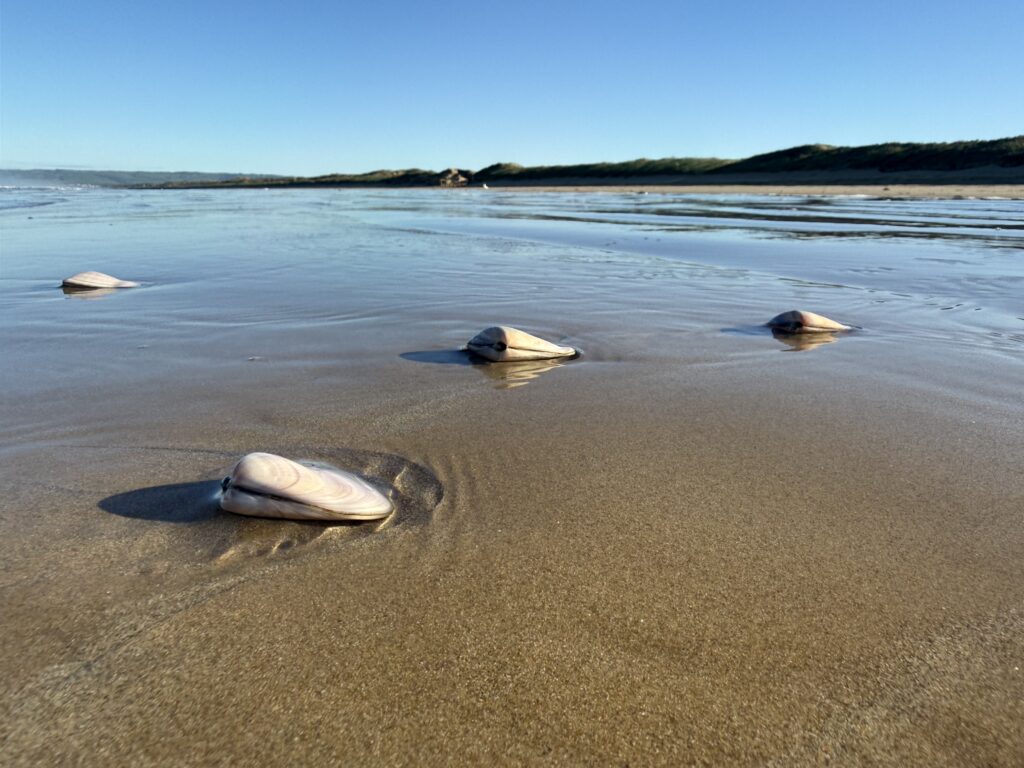
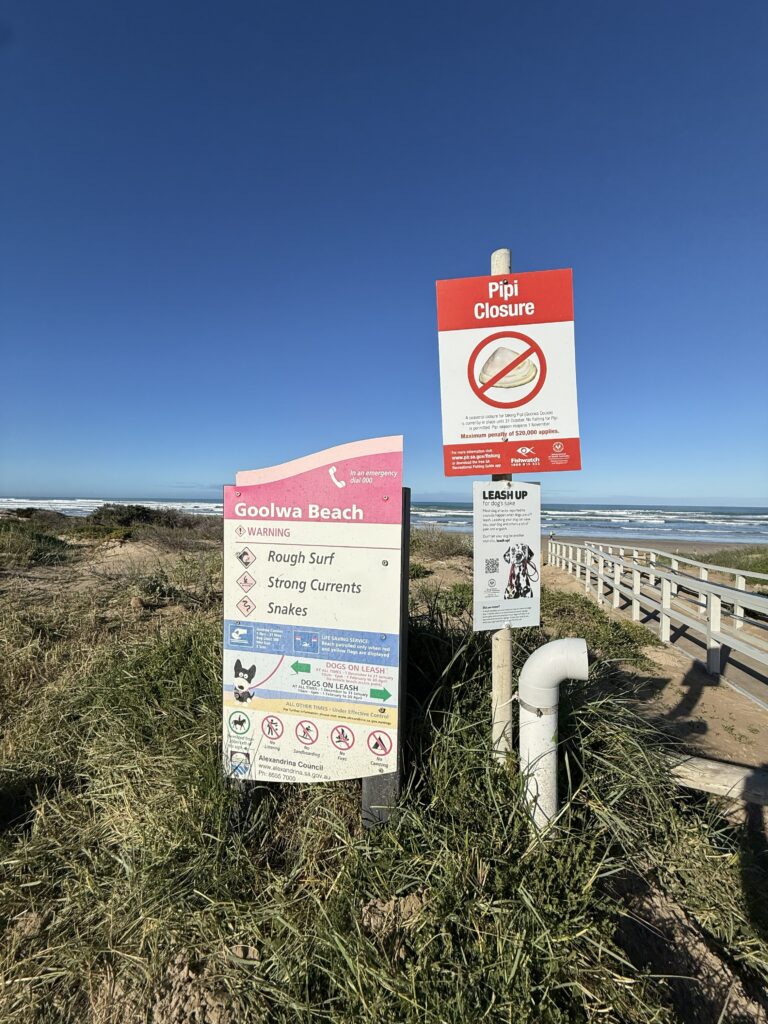
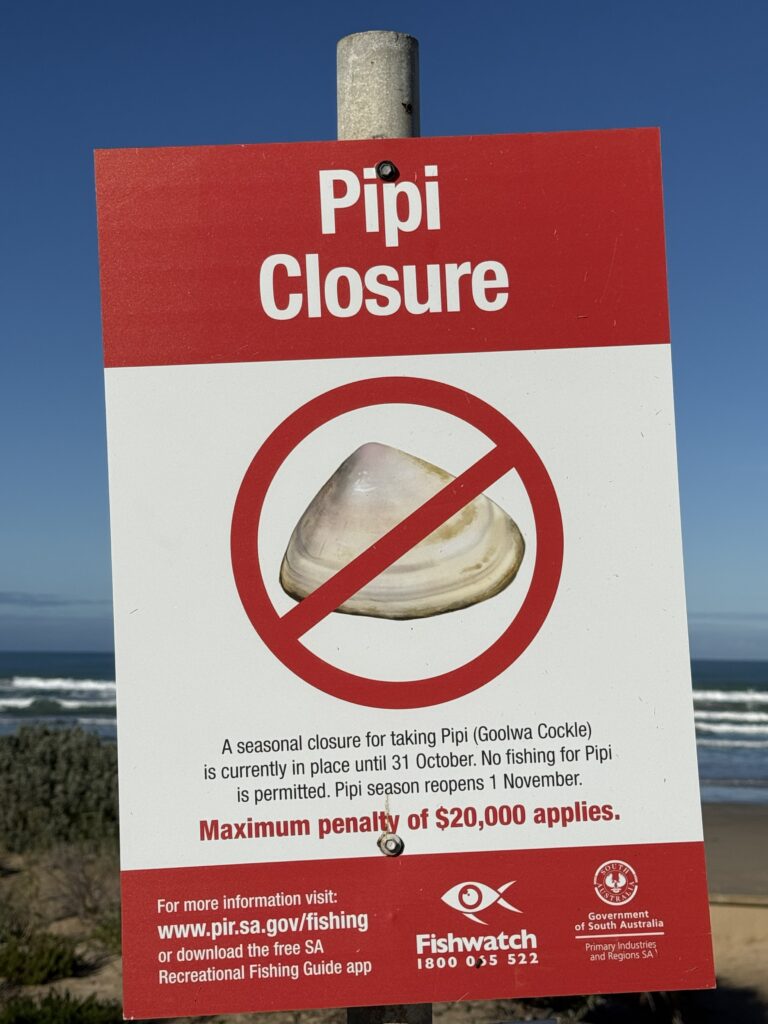
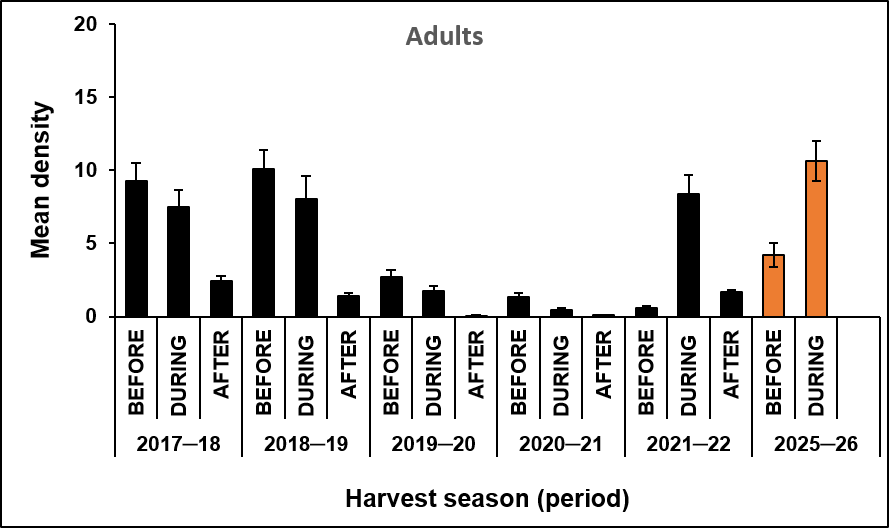
The team’s surveys across 2025-26 have shown that mean catch density is variable, ranging from around 5 adult pipis per square metre (before season) to 10 (during season). Juvenile densities were low, with mean density ranging from around 1(before season) to 4 (during season) pipis per square metre.
The team’s catch data from this week (after season) will complete the dataset for the season enabling comparison with similar surveys that took place between 2017 and 2022.
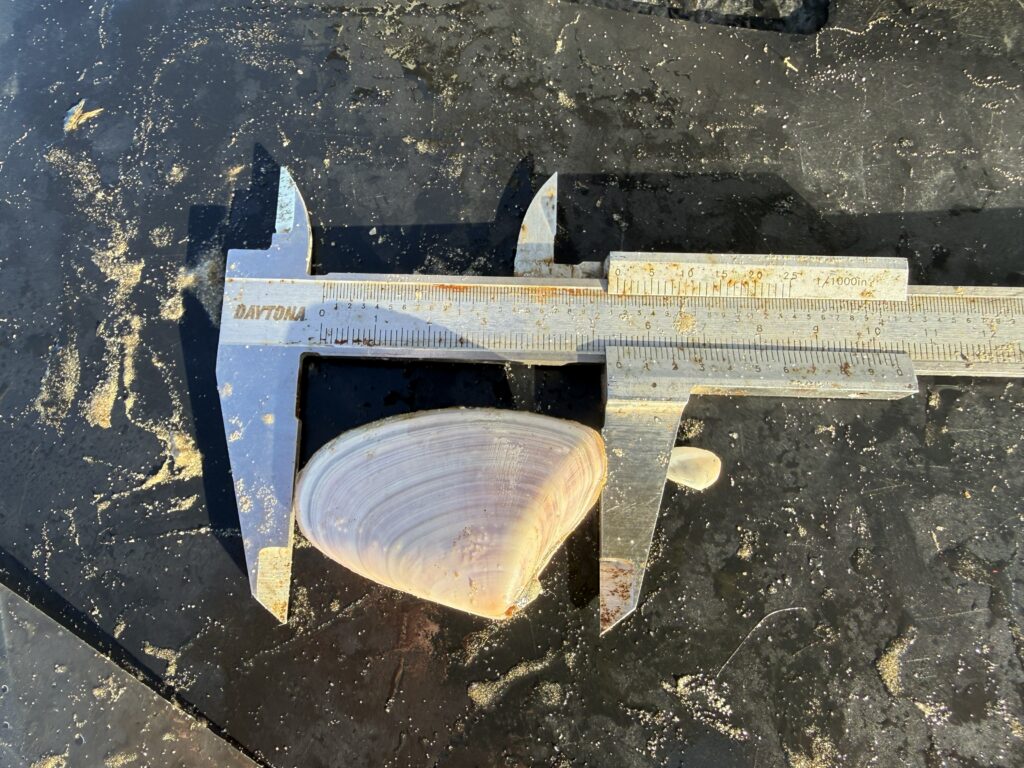
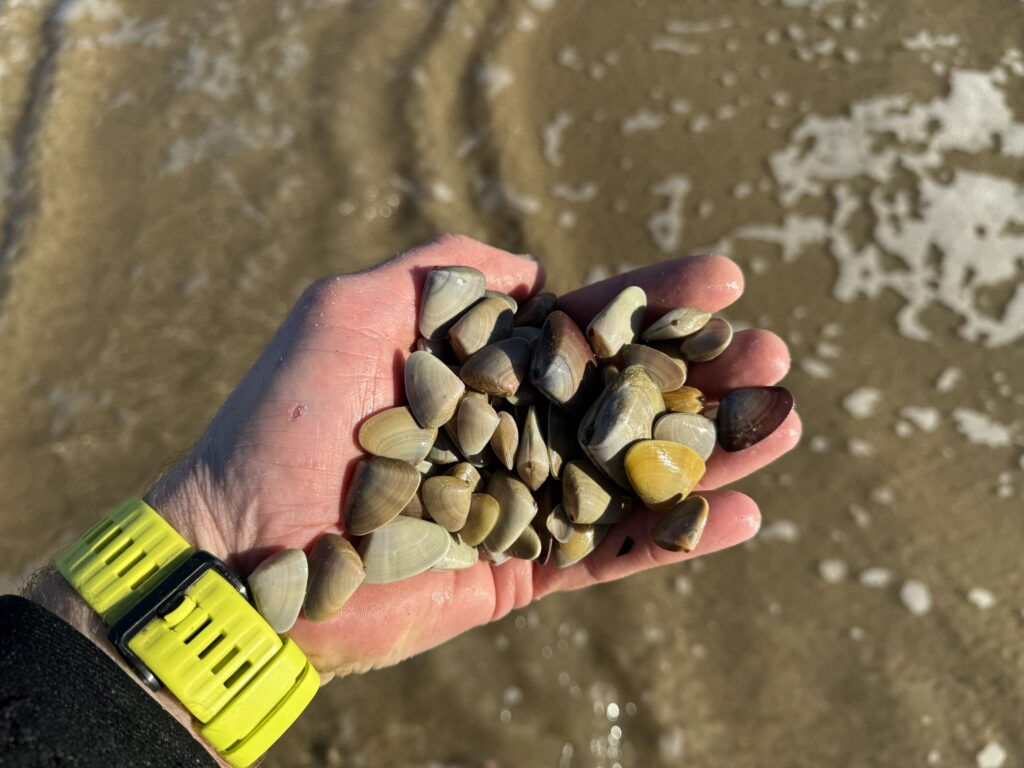
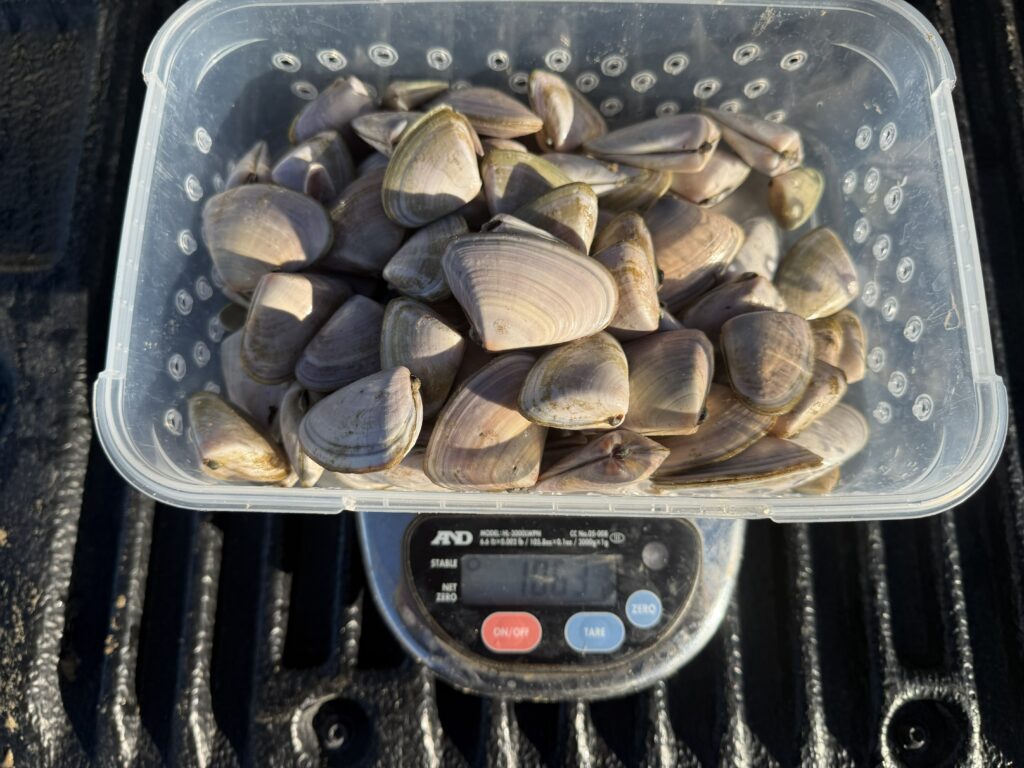
Cockle catches during the 2017-22 surveys showed an incredible amount of variability but some areas had consistently higher pipi catches.
So far, the team think that the pipi population on Goolwa Beach is faring ok despite possible impacts of the algal bloom. Adult numbers this season are comparable to those recorded over the 2017-2022 period.
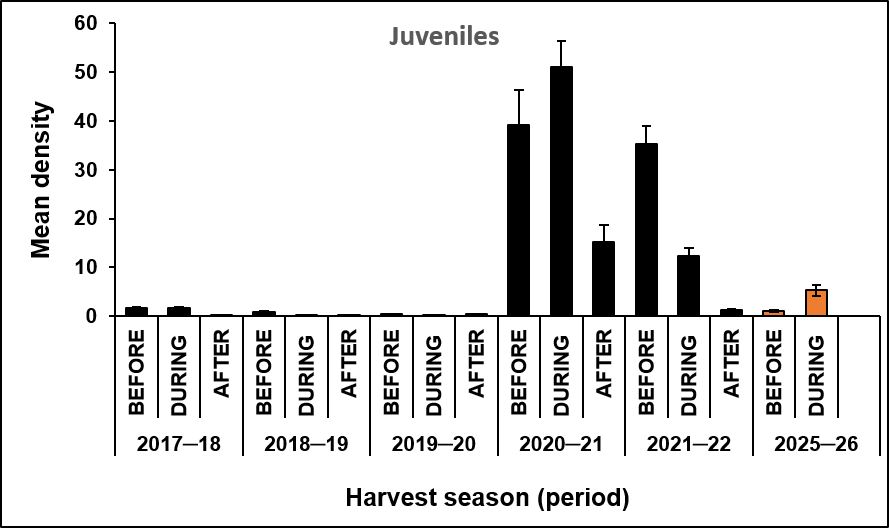
Juvenile numbers were considerably lower than those recorded in 2020-22 but are comparable to other periods of low recruitment. Although juvenile numbers are currently low, there are enough adults in the population to recruit the next generation.
Stay tuned for the final pipi population results once the team have completed their sampling and analysis.