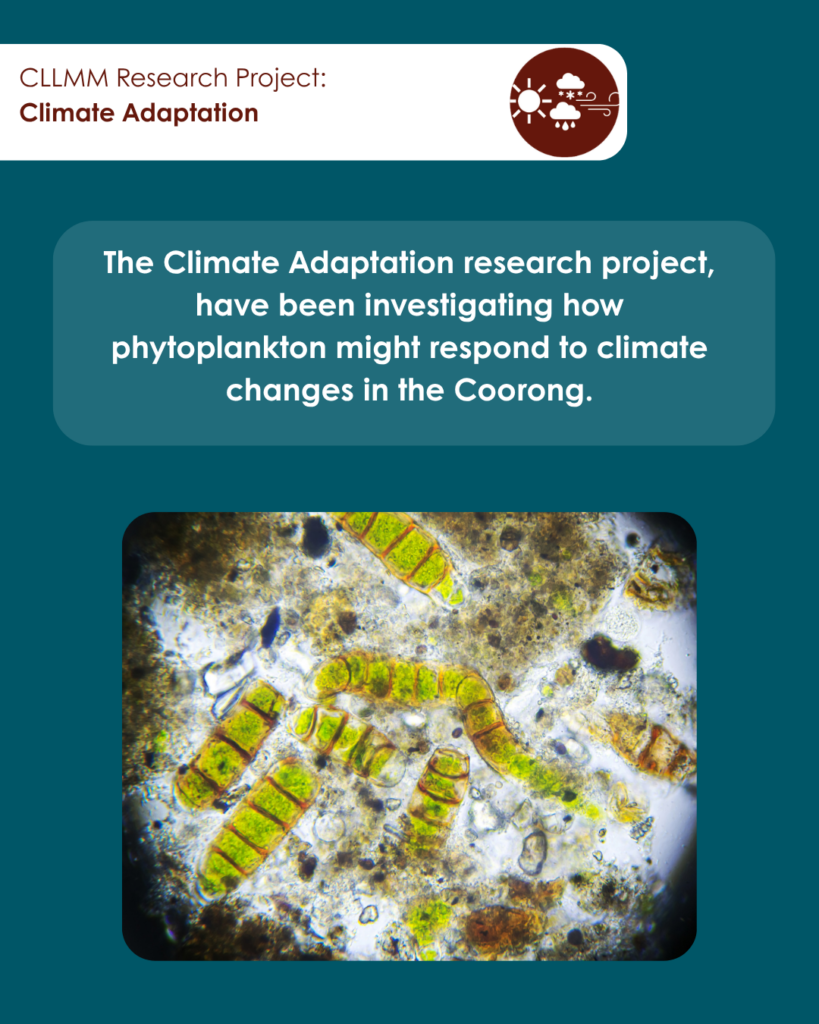
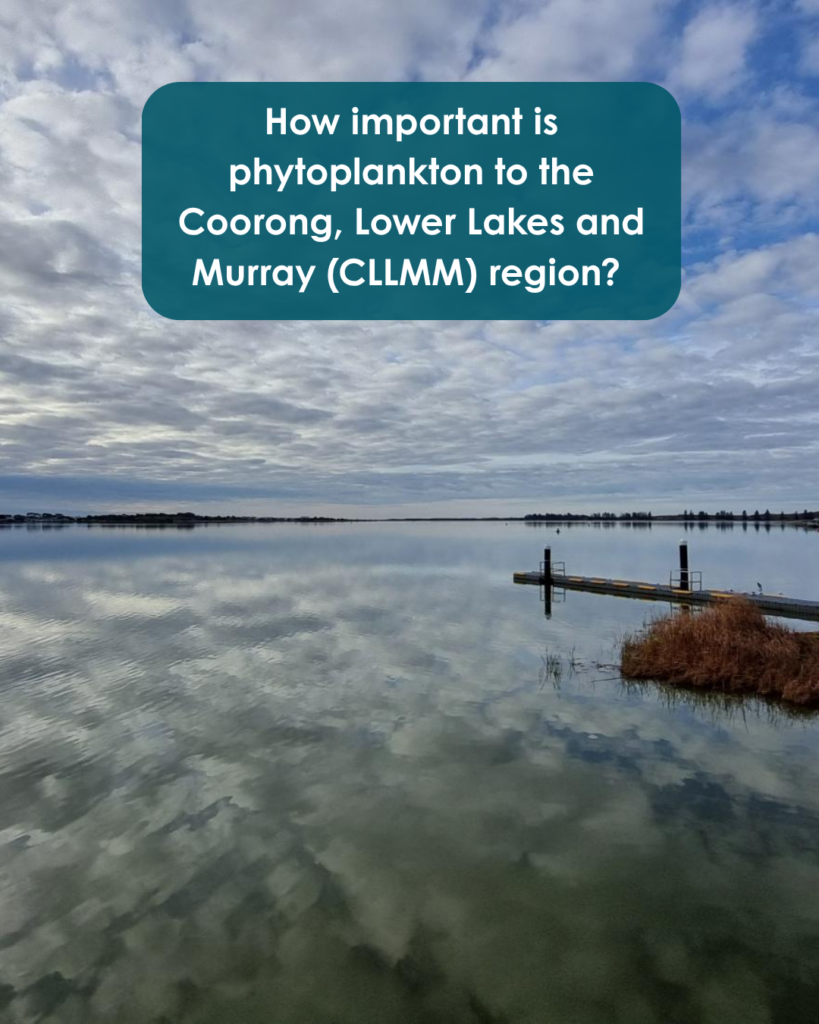
CLLMM Research Centre’s climate adaptation team has been exploring how climate change is likely to affect different aspects of the Coorong so that we can create good strategies to adapt as the climate changes. One of their projects is looking at the effect of climate change on phytoplankton, like microalgae and harmful algal blooms.
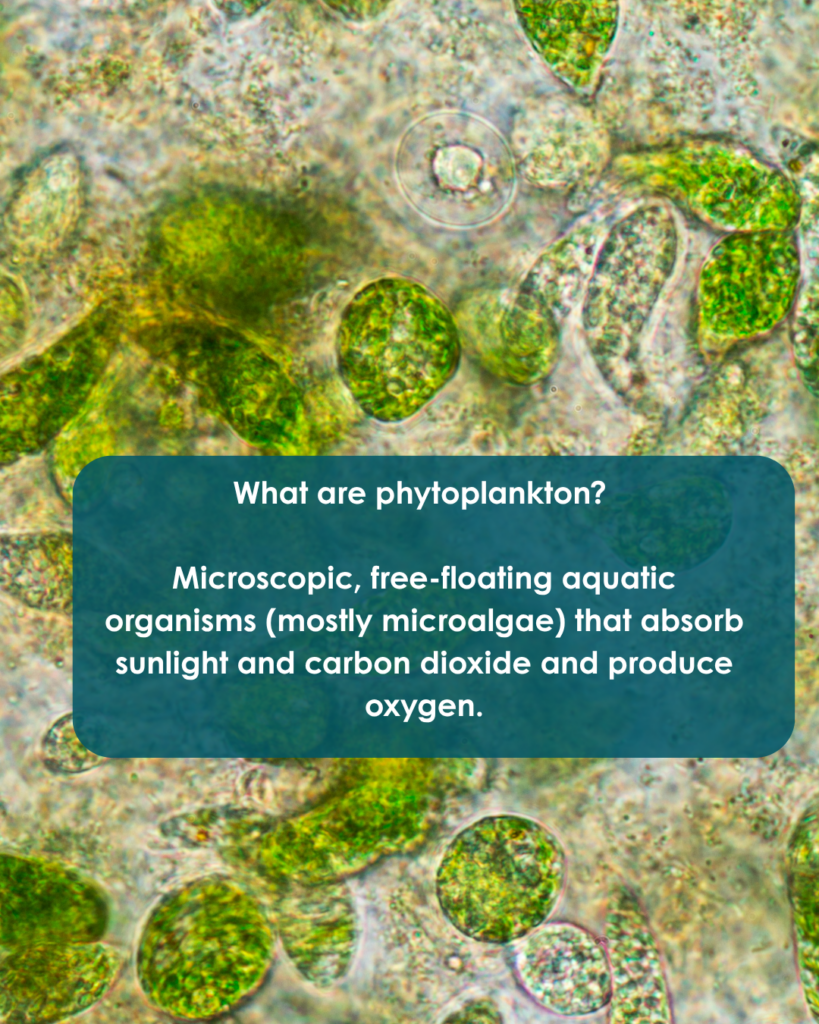
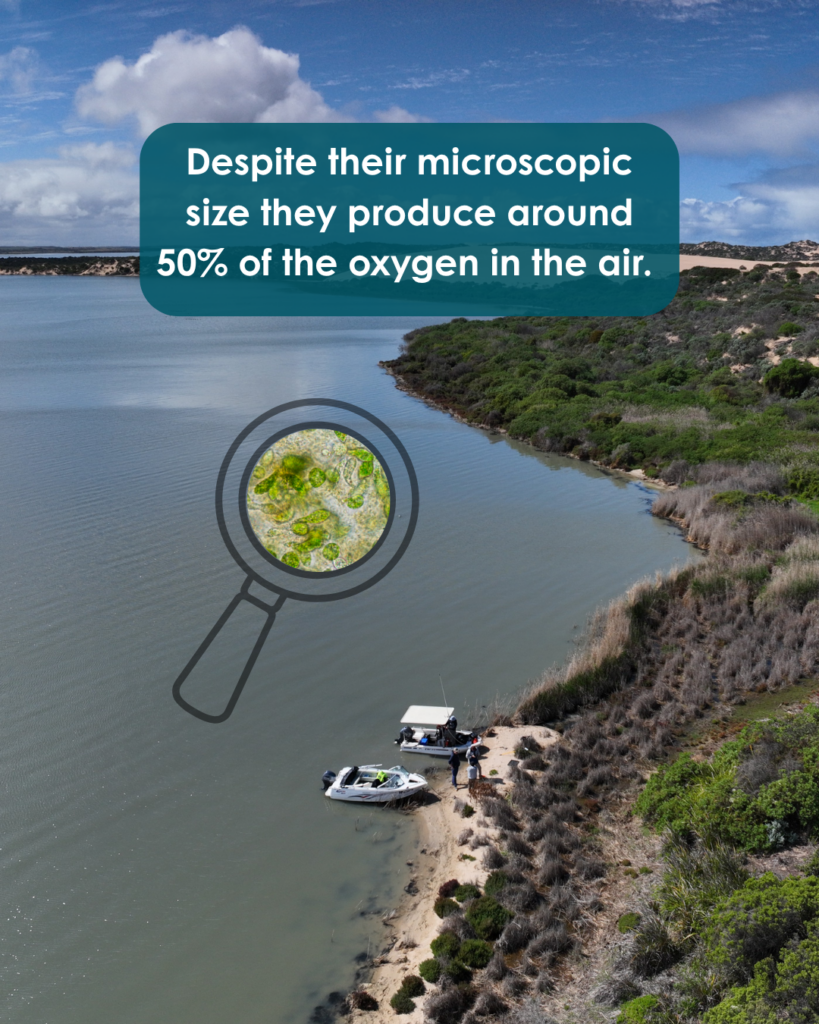
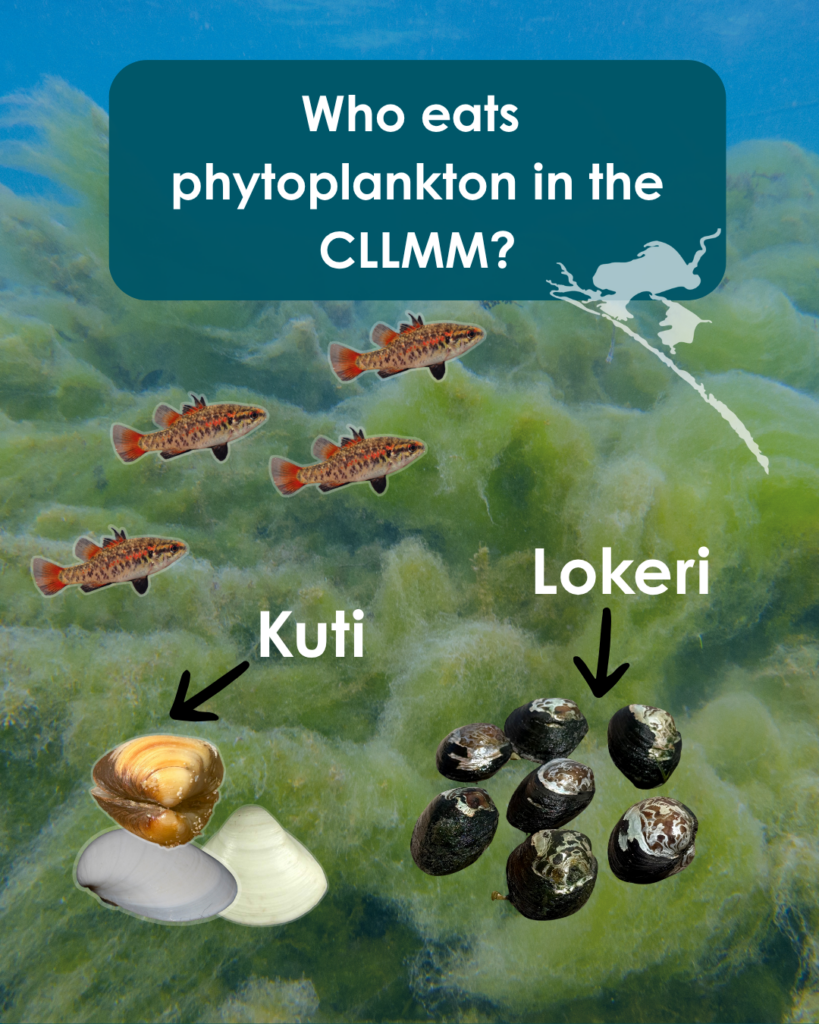
Phytoplankton are microscopic, free-floating aquatic organisms that absorb sunlight and carbon dioxide and produce oxygen. Although tiny, they are also a key part of the Coorong’s food web. Pipis, mussels, insects and small fish all eat phytoplankton. Some phytoplankton can also form harmful algal blooms.
The CLLMM Research Centre has been investigating which phytoplankton species live in all the different Coorong habitats, and how things like water level, salinity, nutrients and temperature might affect them. They’re using this information to help predict how climate change may impact the food web and the risk of harmful algal blooms.
As part of this work, the research team sampled phytoplankton across the Coorong, from freshwater to salty habitats, to see what species (and how many) lived in which environment. They combined their results with 16 years of historical data to get an idea of who liked to live where, and what environmental factors most influenced them.
The team found that salinity and water levels had the most influence on phytoplankton abundance, diversity and community structure. Freshwater and low-brackish, or mildly salty, habitats had the most species, but these communities were dominated by cyanobacteria (including blue-green algae) and chlorophytes (green algae). Extremely salty habitats had fewer species, but they were present in more even numbers.
They also found that while the level of, and risk from, harmful bloom-forming species in the Coorong is low overall, there were more than 80 species that were capable of producing toxins.
Harmful algal bloom risk varies by species and environmental conditions. High-nutrient and low-salinity conditions can promote cyanobacterial blooms, while drought-driven, high-salinity conditions can increase the risk of harmful dinoflagellate blooms.
Want to dive further into the details? The project team have just released their final report and published a paper on their findings.