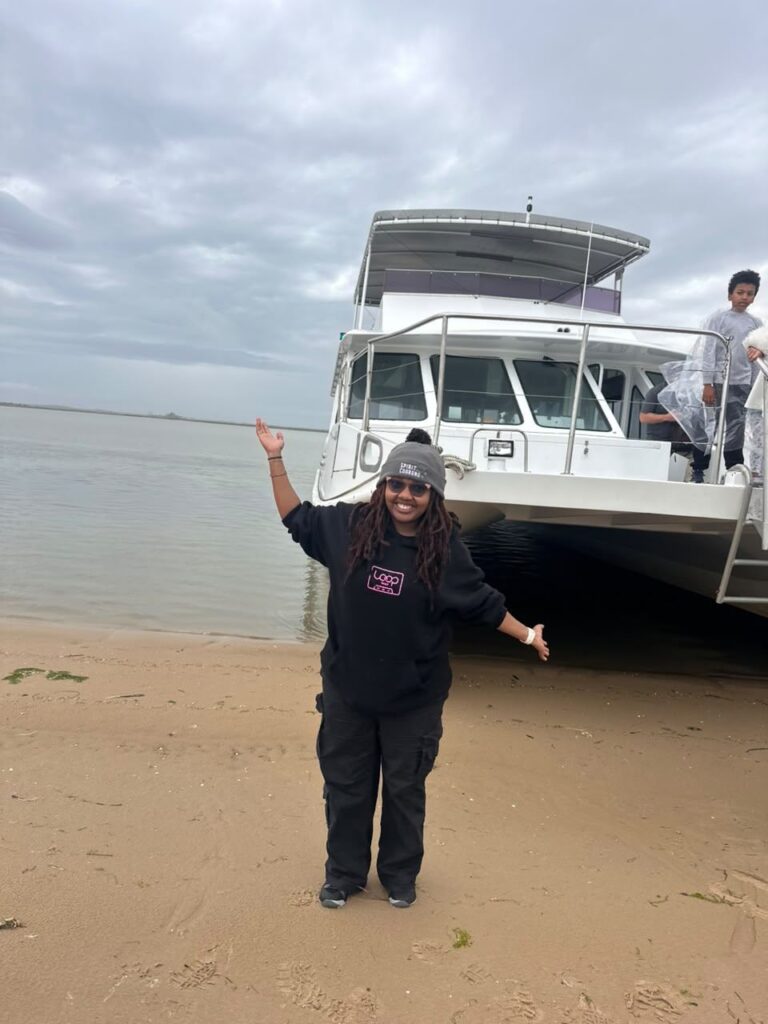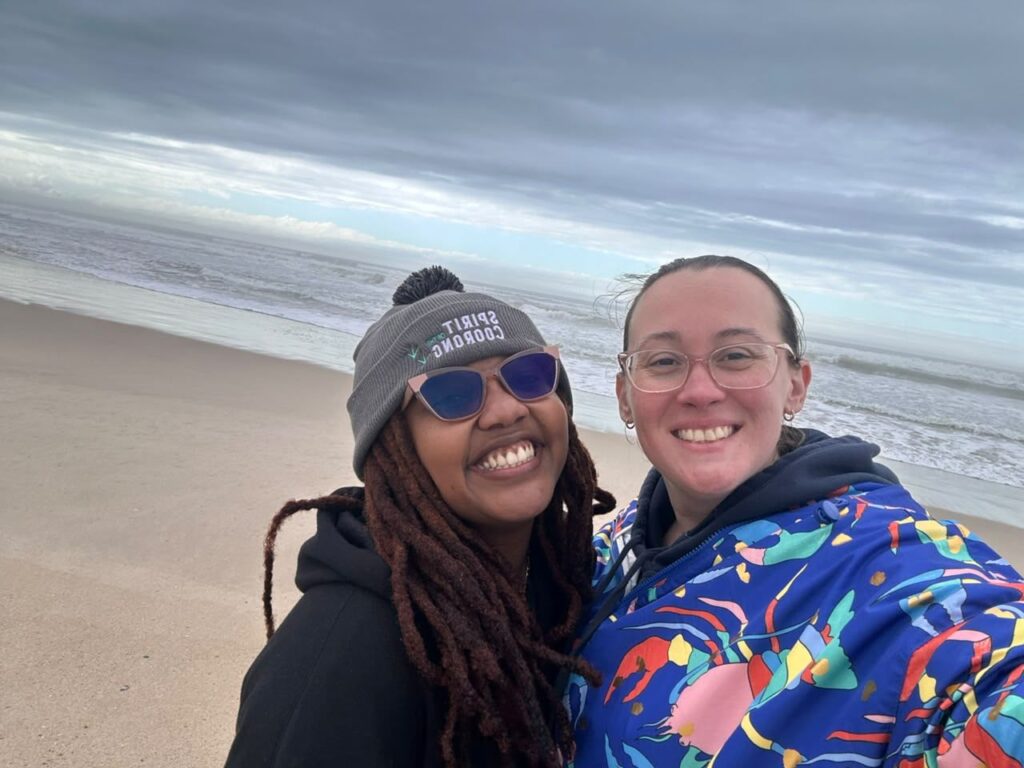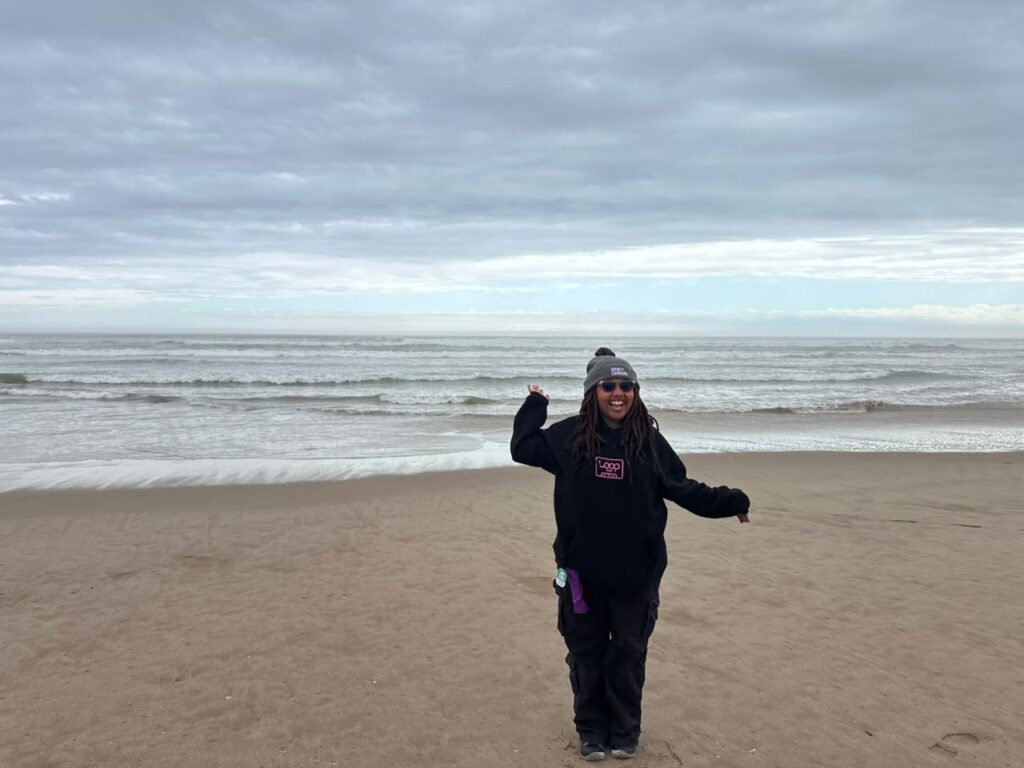
Adelaide University student Daisy Wangui Gitau recently spent a week at the Research Centre on an Environmental Industry Placement. Daisy is in the final semester of a Masters in Science and Environmental Conservation, and an earlier subject, Fire and Culture, led to her interest in First Nations participation in environmental management.
“I want to focus on knowledge integration particularly the integration of species/ecosystem monitoring, and engagement with local communities. CLLMM’s approach to co-design with the Ngarrindjeri community, and integrating Indigenous knowledge with Western science is really inspiring,” said Daisy.
Daisy is examining a particular project, Muscles in the mud: engaging community power to monitor Lokeri (Velesunio ambiguus) in the Lower Lakes. Project Lead Dr Scotte Wedderburn led her through the process that built relationships between scientists and Aboriginal knowledge holders, leading to high levels of participation in both field and laboratory work. This work supported both the collection of information and the continuation of Ngarrindjeri cultural practice.
“It’s clear that Ngarrindjeri knowledge helped identify concerns and changes in Lokeri populations before and alongside the scientific monitoring. Scotte said scientists became aware of community concerns about Lokeri through yarning circles, and this helped generate scientific interest in investigating the species and involving Ngarrindjeri directly people in the work,” she said.
The two knowledge systems also contributed different but complementary information. Ngarrindjeri knowledge of where Lokeri had historically occurred, seasonal changes, changes to water levels, sediment conditions, relationships with fish and other species, shows how mussel presence is an indicator of healthy water and Country.
Scientific monitoring then provided more quantitative information about the extent and reduction of Lokeri populations.
“So, for my project, I am using the Lokeri case study as a strong example of knowledge integration because Ngarrindjeri ecological knowledge did not just sit alongside the scientific monitoring; it helped identify the issue, informed where and what to look at, contributed to interpreting ecosystem health, and influenced how the research and monitoring process was conducted,” Daisy says.
From Nairobi, Kenya, Daisy’s interest in environmental conservation is inspired by Kenya’s Wangari Maathai, awarded the Nobel Peace Prize 2004 for her work which included establishing the Green Belt Movement, mobilising rural women to plant millions of trees to combat deforestation and soil erosion. Her undergraduate studies in Kenya considered waste collection and waste to landfill, increasing significantly as urban development swallows protected land and destroys ecosystems.
Daisy will design and present a project poster before writing a final report on the project and the environmental industry placement. We look forward to collaborating with her during this process!