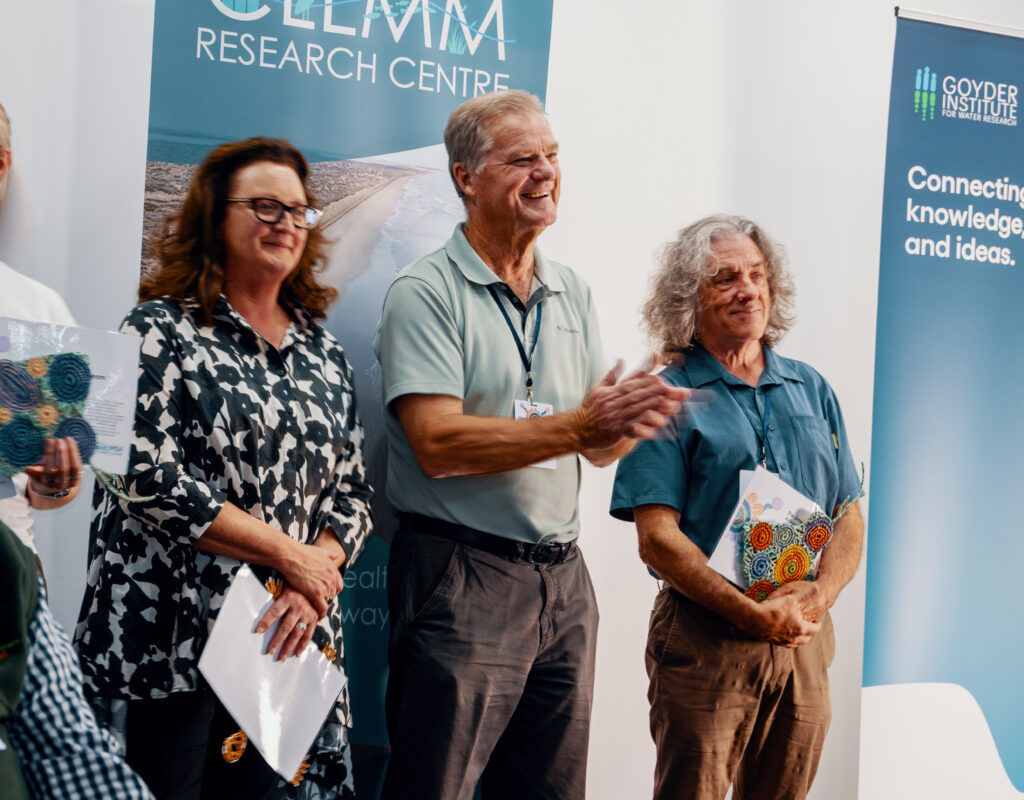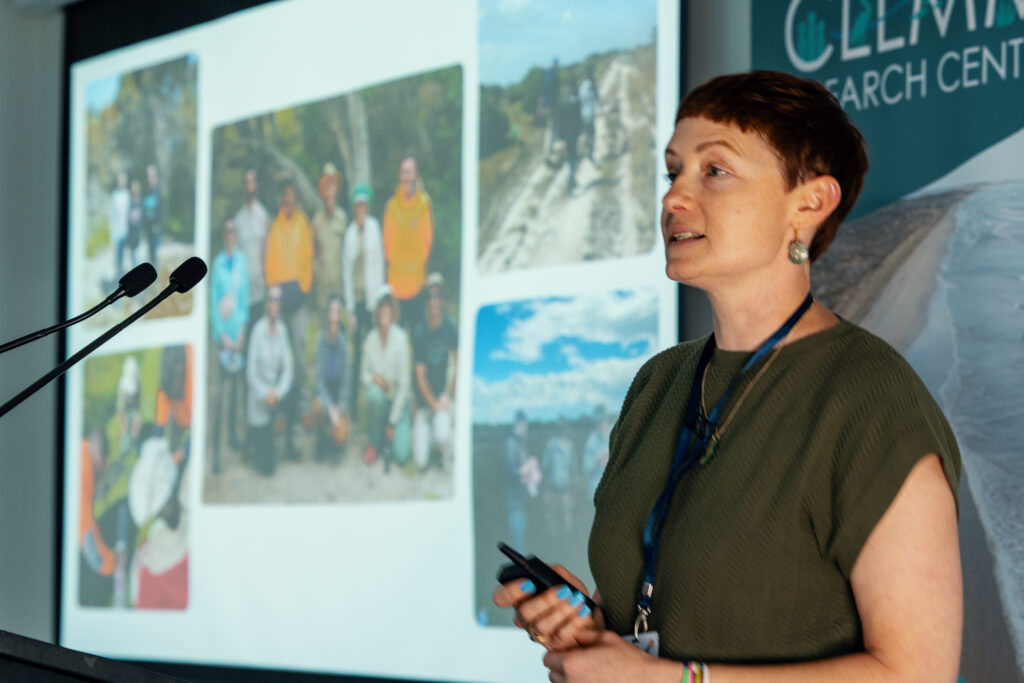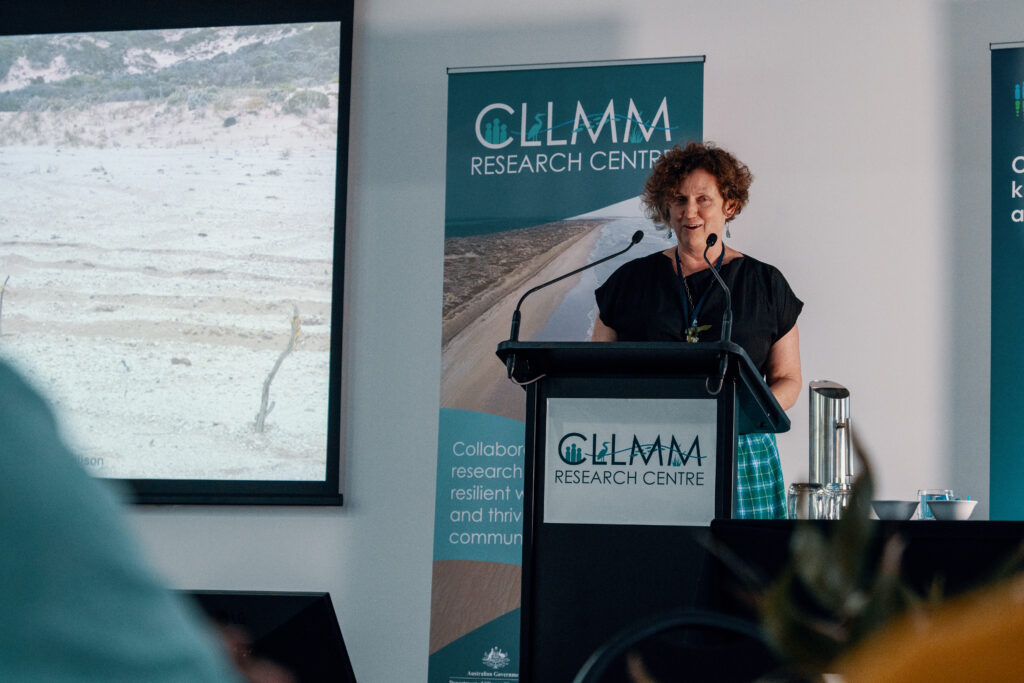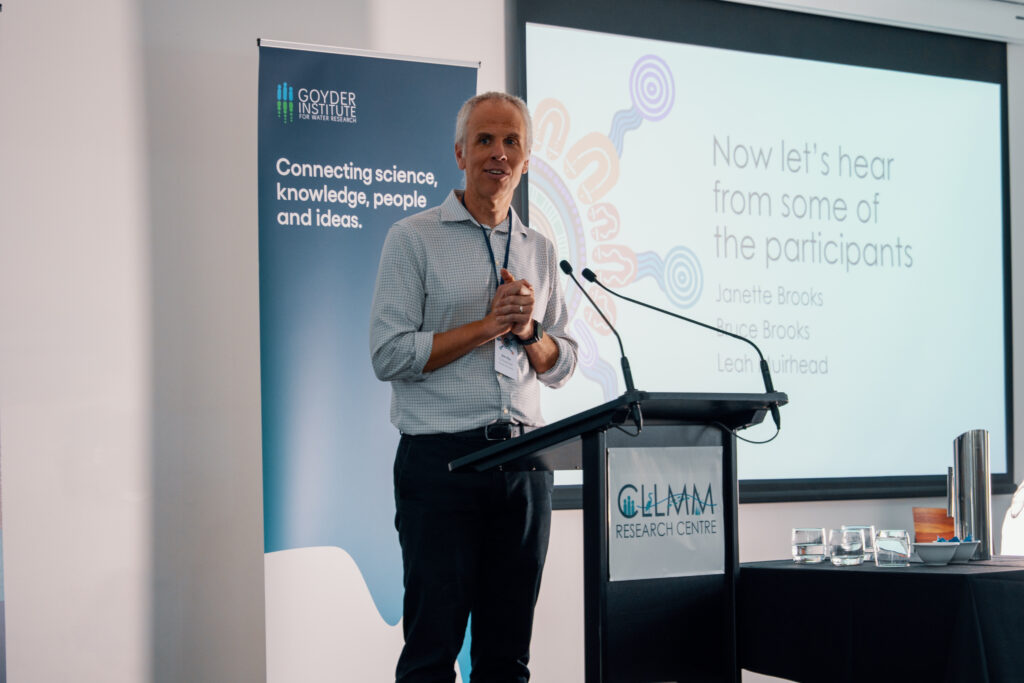
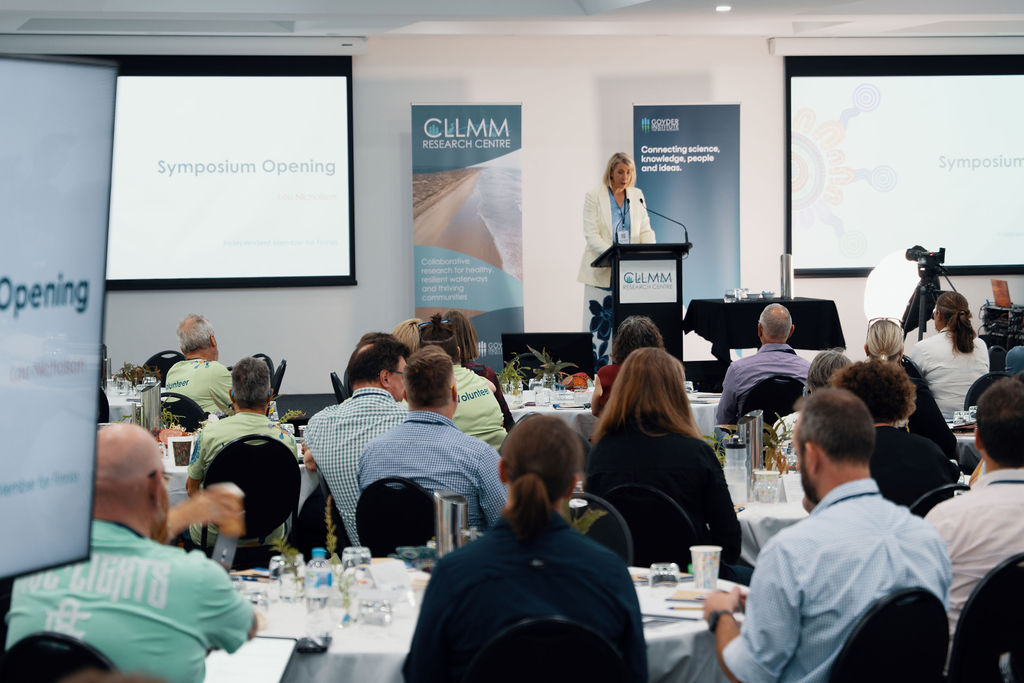
More than 200 researchers, First Nations knowledge holders, policy makers and community members have gathered to discuss the future of the Coorong Lower Lakes and Murray Mouth (CLLMM) region in the face of climate change. The CLLMM Research Centre’s science symposium Where our Waters and People Meet was held on 19-20 November 2026 at the Victor Harbor Convention Centre and officially opened by the Independent Member for Finniss Lou Nicholson MP.
Independent Member for Finniss Lou Nicholson MP welcomed the gathering, noting how vital the community-first approach of the CLLMM Research Centre is for the region.
“Fishers, farmers, conservationists, local businesses, community organisations and scientists have not connected loosely but sat around the same table. That is what makes the CLLMM Research Centre so incredibly significant,” said Independent Member for Finniss Lou Nicholson MP.
“This symposium arrives at an incredibly significant moment for South Australia. The Murray-Darling Basin Plan review is underway…and it will help shape the next era of management of Australia’s largest river system. For South Australia, the stakes are enormous and here where we live at the Murray Mouth, those stakes are very real,” she said.
The symposium program was designed around the themes of Sharing Our Journey, Research in Action and Growing the Future Together. Delegates heard about the latest research from Centre’s 25 project strong Science Program, covering everything from waterbird conservation, landscape revegetation to coastal dune dynamics, beach use, lokeri (freshwater mussels) and climate adaptation. On the second day of the symposium, delegates also came together to workshop ways to build the future of the region together.
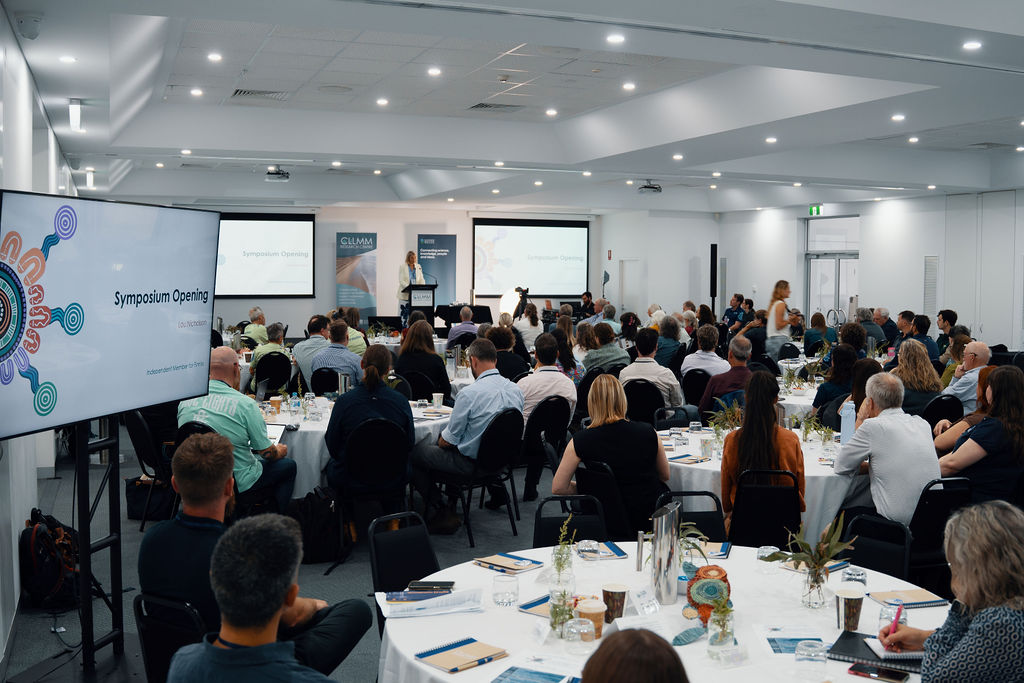
“Bringing more than 200 people together from across the region highlights just how deeply our communities care about the future of our waterways and this internationally significant region,” said Jane French, Centre Manager, CLLMM Research Centre.
“This symposium is about turning locally-driven science and First Nations knowledge into practical actions for the CLLMM region in the face of climate change and working out how we can grow our future together,” she said.
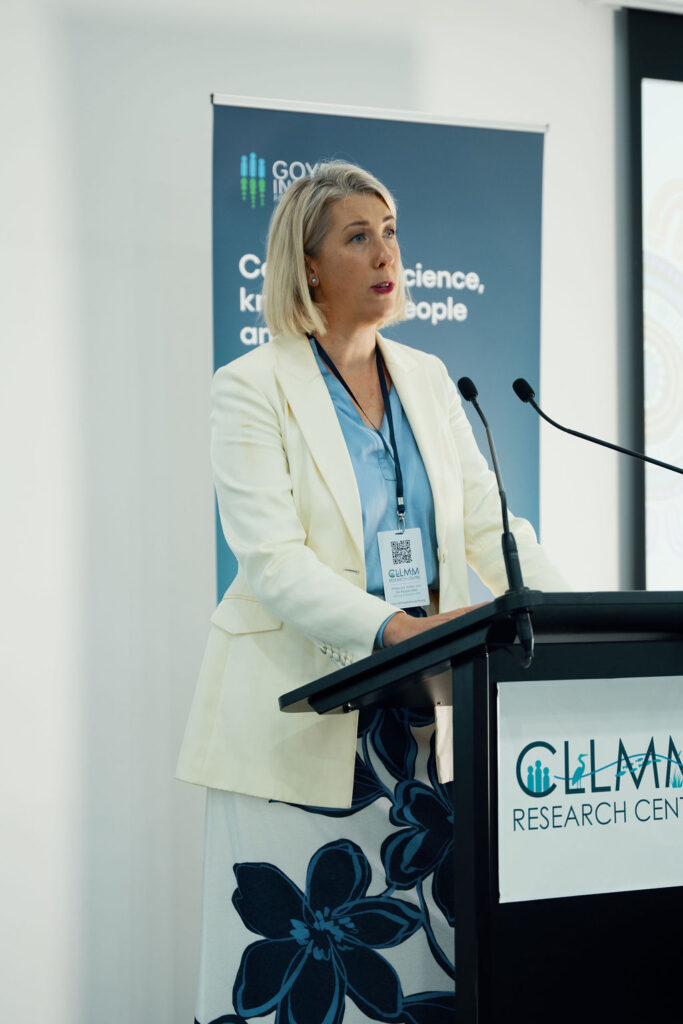
SA Commissioner for the River Murray Emma Carmody gave the opening plenary, where she emphasised that a healthy environment is not just one human right among others, but a right that underpins our ability to exercise every other single human right.
“South Australia, across the whole basin, is the only state that is arguing that the rivers need more water,” she said.
“South Australia has always been the state advocating for more rigorous evidence-based basin plan. So that’s why they look to us, to this state, to the communities defending the river, to the scientists, to the CLLMM Research Centre –they look to all of us collectively for leadership.”
SA Commissioner for the River Murray Emma Carmody reiterated the need for ongoing collaboration to address challenges in CLLMM, the Murray–Darling Basin and beyond.
“We have to work as a team…this is an area that is so complex. It really requires cross-disciplinary collaboration, cross-sectoral collaboration. We are stronger if we work together.”
Senator Andrew McLachlan CSC gave the opening plenary on day two of the symposium via video from the banks of the River Murray in Murray Bridge (with a special bunyip appearance). He echoed calls to continue fighting for the health of the River on the national stage and the importance of the CLLMM Research Centre.
“Without environmental flows the Lower Lakes and our river communities will not thrive. The Lower Lakes have been listed as critically endangered. The stakes are high. We are fighting not only for our communities but for the wildlife that is dependent on the River and the Lakes,” he said
“The work you do at the Centre, and at this symposium, are critically important – the science underpins the arguments that we take to Canberra,” he said.