Estuaries are bodies of water on the coast where freshwater from a river(s) meets and mixes with saltwater from the ocean. They are a unique and ever-changing blend of land, river and sea and play an important ecological role.
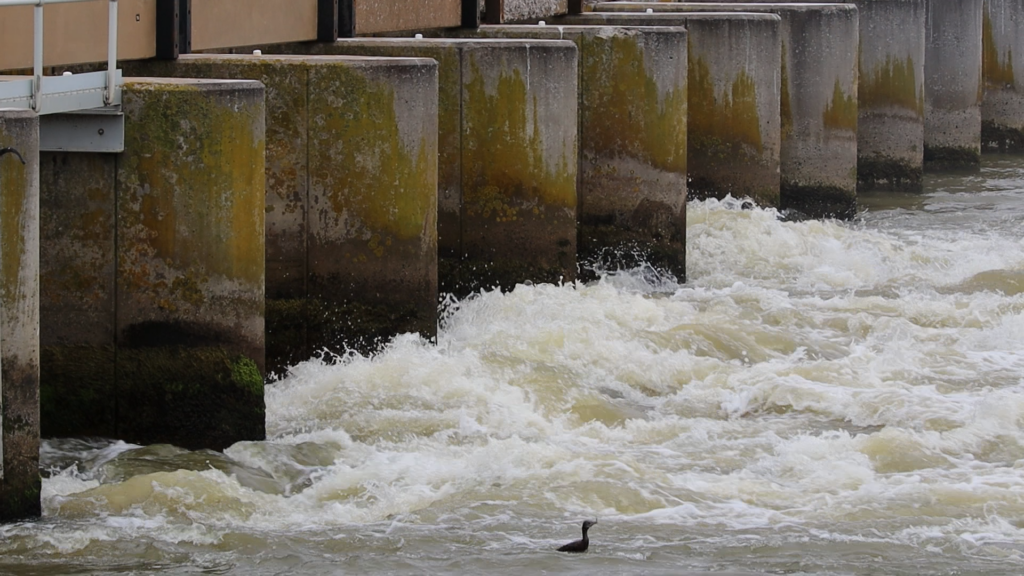
The River Murray’s estuaries were affected when 5 barrages were built in the 1930s to separate Lake Alexandrina and Lake Albert from the Coorong. The barrages were built to protect freshwater supplies and reduce seawater intrusion, but they also fragmented freshwater, estuarine and marine habitats. Climate change is likely to increase habitat fragmentation and many species in CLLMM need a combination of these habitats to survive.
A CLLMM Research Centre project explored whether some two-way movement of water through the barrages, when Coorong water levels exceed lake levels (known as reverse flows), can improve habitat connection while still managing the risks to lake salinity and freshwater-dependent habitats.
How did barrage operations change and what did researchers look for?
The team worked with SA Water and DEW to intermittently keep one barrage bay open at Boundary Creek and Ewe Island to enable reverse flows.
They then monitored water salinity, temperature and water speed upstream of the barrages to see how reverse flows affected the area. They also used these data to build a model that can predict how salinity might change under different barrage operating scenarios.
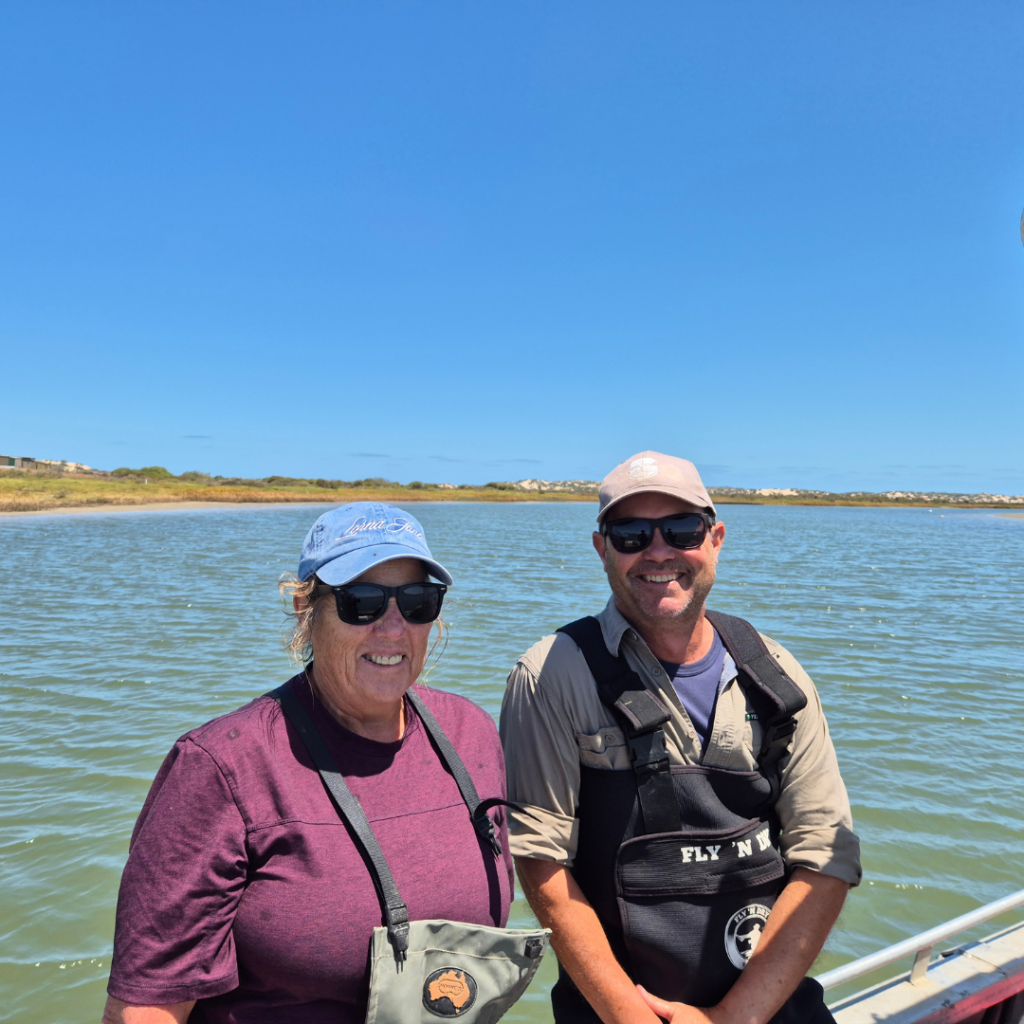
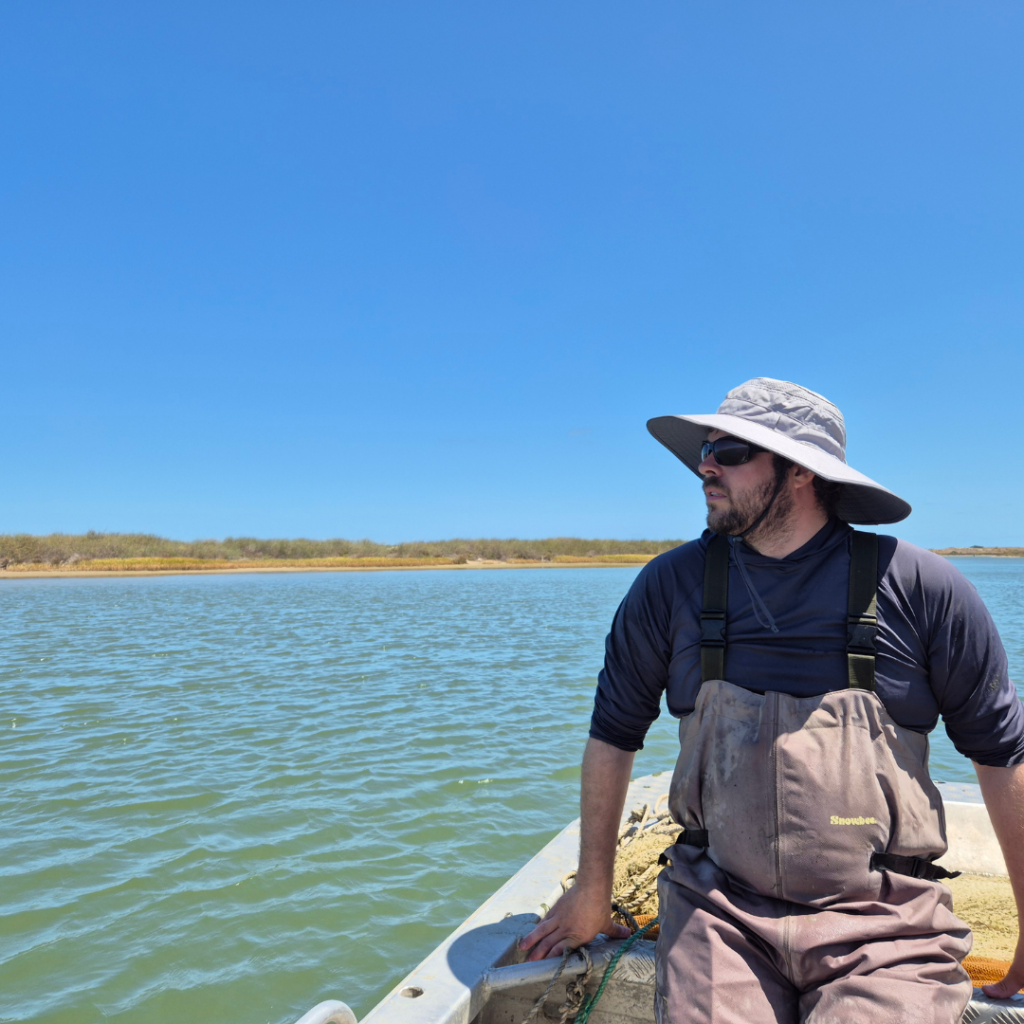
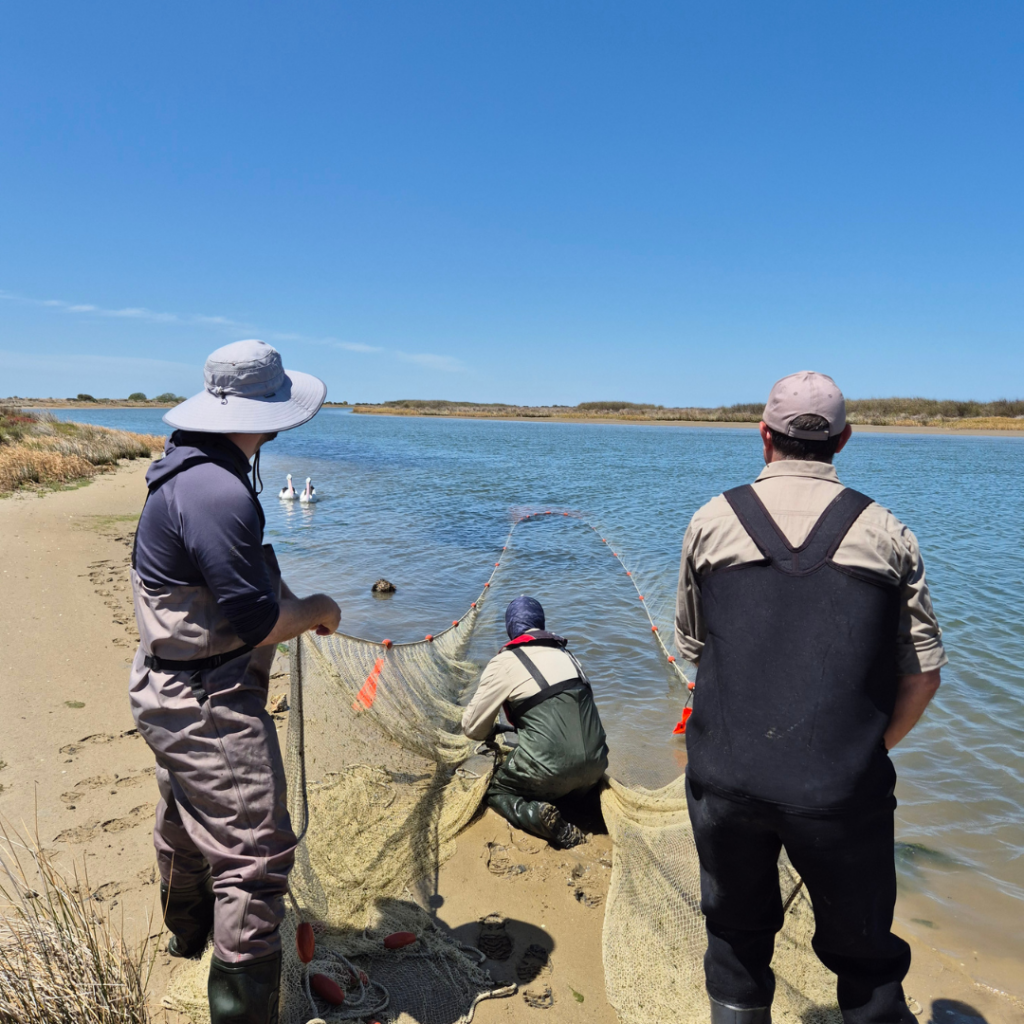
At the same time, they assessed fish movement through the barrages using larval drift/tow nets, open bay trapping and fishway trapping.
What changed with reverse flow barrage operations?
Reverse flows increased salinity upstream of the barrages in specific areas for a short time. Once downstream flows resumed, salinity went back to normal.
Reverse flows helped larval, juvenile and adult fish move across the barrage interface. Larval sampling caught 11 different species, while 13 species were captured moving through fishways and open barrage bays. The team’s results suggest that reverse flows can substantially help fish move upstream, particularly for species (and life stages) that can’t or are unlikely to use fishways.
The model the team developed could accurately predict salinity and water speed dynamics associated with reverse flow events. When they used this model to look at different barrage operational scenarios, they were able to develop ‘operational rules’ that could be used to increase estuarine connectivity while managing salinity. This type of more flexible operation was better for the ecosystem than historical gate closure practices.
Where to from here?
The CLLMM Research Centre’s work supports using controlled, event-based barrage operation to expand the areas where fresh and saline water can mix in estuaries and improve estuary connectivity. This can be achieved without permanently opening or removing barrages.
They recommend:
1. using open barrage bays and reverse flows in barrage operations
2. automating barrage gates so that they can be operated remotely in response to real-time water levels.
They’ve also recommended future modelling, monitoring and research efforts that will help build a fuller picture of what effect reverse flows will have on the aquatic ecosystem and foster collaboration across SA Water, DEW, CEWH, MDBA, the community and researchers.
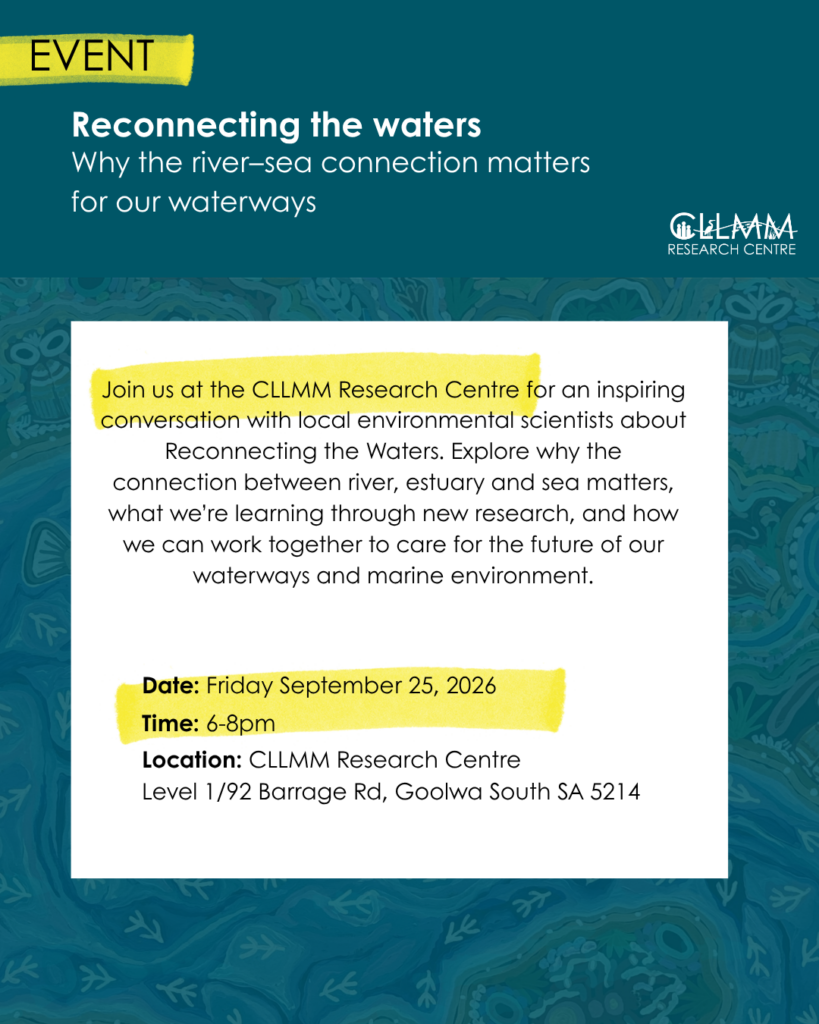
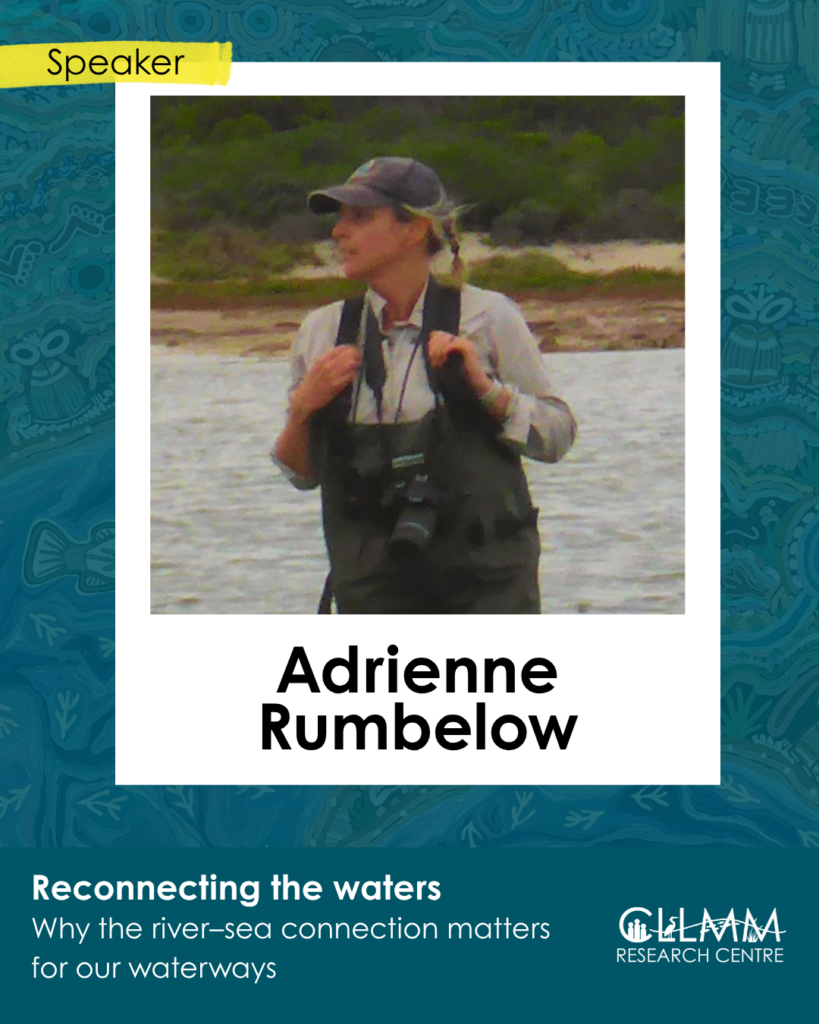
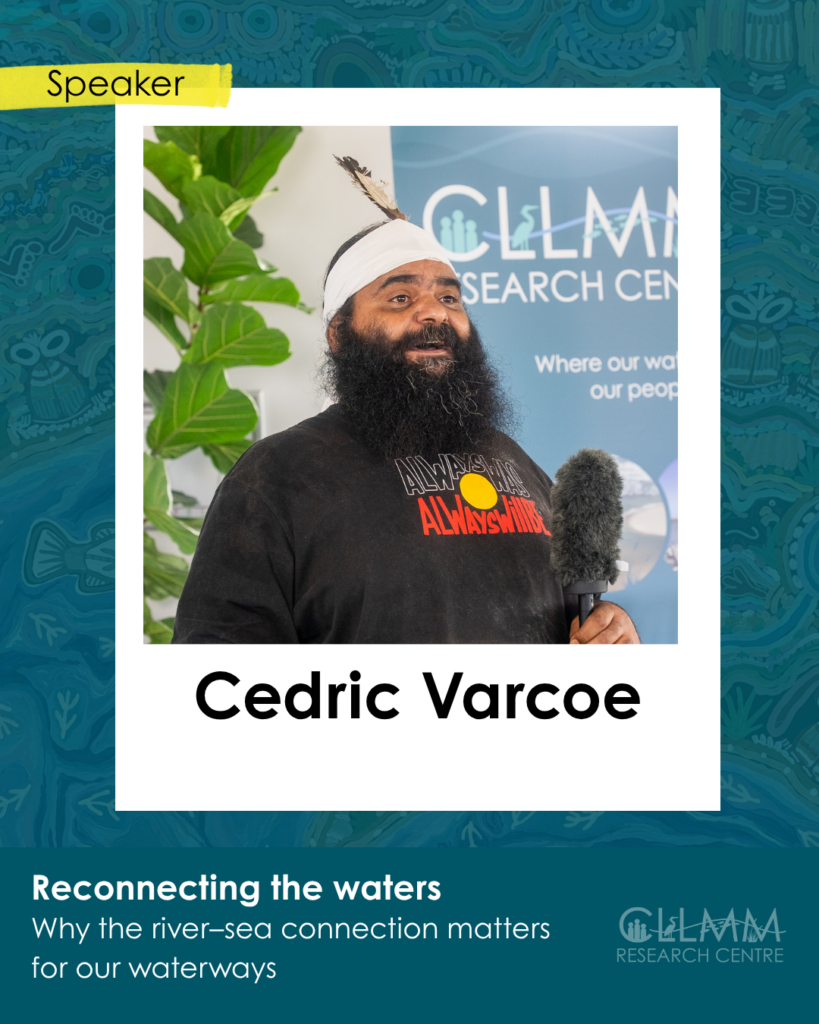
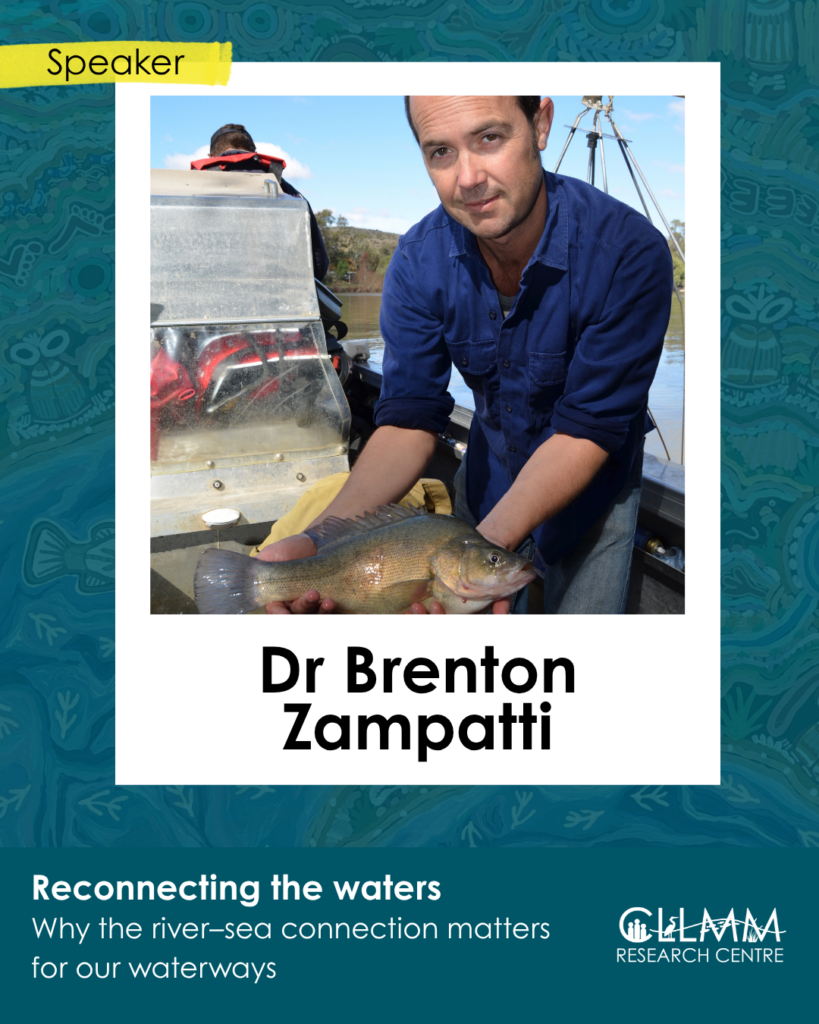
Want to dive deeper into their findings? Come and listen to the project team talk about their work at Reconnecting the Waters: Why the river–sea connection matters for our waterways.
Friday 25 September, 6pm-8pm
CLLMM Research Centre
Level 1/92 Barrage Rd, Goolwa South SA 5214
All welcome