The Muscles in the Mud project is examining recovery rates after Lokeri disappeared during the Millennium Drought.
Freshwater mussels are one of the most at-risk groups of animals in the world, with almost half of all species extinct or threatened. Lokeri (Velesunio ambiguous) is one of 18 species of freshwater mussel in Australia, and it’s always been important to the Ngarrindjeri people as a food source, for tools, and for decoration. Lokeri is also important throughout the CLLMM region because the animals and their shells help create healthy sediments, recycle nutrients, rehabilitate habitats and are essential for biofiltration which removes pollutants.
“We really don’t know much about Lokeri so have had several field trips to historic sites to see if we could find living animals,” said project lead Dr Scotte Wedderburn.
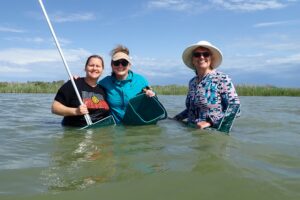
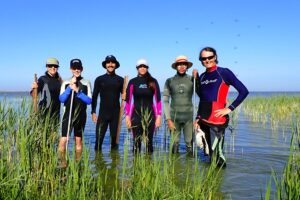
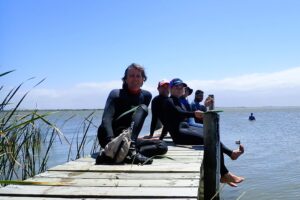
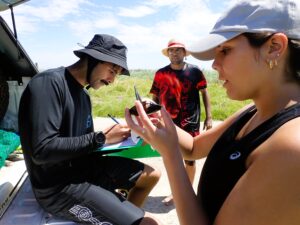
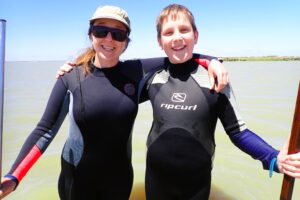
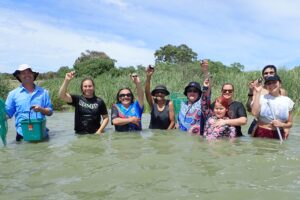
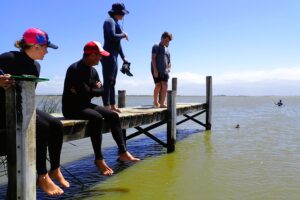
Thirty-four known historical sites in the Lower Lakes were surveyed, with teams of researchers, community members and individuals from the Ngarrindjeri Nation shuffling through the mud to try and locate Lokeri using their feet.
76 Lokerar were found at sites in Lake Alexandrina, which is very encouraging, but none were found in Lake Albert. Overall the team found that Lokeri abundance in the Lower Lakes was less than 1% of historic abundance, when Lokeri was last surveyed in 1979.
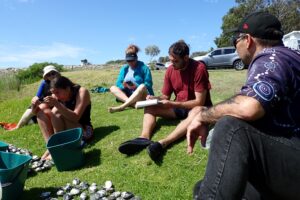
The team also aged Lokeri in the laboratory using the annual marks on their shell which may also be used to determine how their growth was related to environmental conditions. The oldest Lokeri found was 14 years old and the youngest was 4.
Although they weren’t found in high numbers overall, there are signs that Lokeri could be recovering after the Millenium drought.
“Finding lokeri during our research may represent the very early stage of a very slow recovery following the catastrophic impacts of drought. Numbers were not high. Lokeri existence is still vulnerable so improving understanding of growth and reproduction in changing conditions is vital for management and decision-making on the use of water in the River Murray and Lower Lakes,” says Scotte.
This project brought together landholders, community groups and the Ngarrindjeri community to help redress the deficiency in knowledge regarding Lokeri in the Lower Lakes. Around 25 scientists and citizen scientists worked on the project and more than 35 people attended yarning circles.
The team have been sharing their results so far through yarning circles – make sure you sign up to the CLLMM RC newsletter for all the upcoming event updates.